Your customers are already searching. The real question is whether they are finding you, your competitors, or a national directory first. For Louisiana businesses, marketing has to be local, practical, and built around how people actually make decisions. A business in Lafayette, Thibodaux, Youngsville, Broussard, Houma, Baton Rouge, New Orleans, New Iberia, Breaux Bridge, or anywhere across Acadiana needs more than a nice-looking website. It needs a search strategy that helps the right people find the right page at the right time.
Local SEO, Google Ads, and website content work best when they are connected. A Google Business Profile can help someone find you on Maps. A service page can explain why they should choose you. A blog post can answer the question they searched before they were ready to call. A Google Ad can capture immediate demand while SEO builds long-term visibility. That connected system is what Abode builds through search-first marketing services.
Why local marketing in Louisiana needs its own strategy
Louisiana search behavior is local and relationship-driven. People often search by city, parish, nearby town, service type, and “near me” language. They compare reviews, websites, photos, social proof, and whether the business feels credible. A service business can lose qualified leads simply because its information is inconsistent, its website is vague, or competitors have clearer pages.
For law firms, insurance agencies, medical practices, physical therapy clinics, construction-related services, and professional service businesses, trust is part of the sale. The website must do more than describe services. It has to make the business easy to understand, easy to find, and easy to contact.
The core pieces of a stronger local marketing system
A strong local marketing system includes local SEO, a clear website, Google Business Profile optimization, accurate listings, reviews, service pages, helpful content, paid search when appropriate, and tracking. If one piece is weak, the entire system can feel scattered. If all pieces support the same message, your business becomes easier to find and easier to choose.
- Local SEO: improves visibility in Maps, organic results, directories, and service-area searches.
- Website design and copy: explains who you help, what you offer, where you serve, and why people should trust you.
- Google Ads: captures high-intent searches while organic rankings grow.
- Content and social media: answer questions, build familiarity, and support internal links across your site.
- Strategy: keeps every tactic focused on better inquiries instead of random activity.
Google Business Profile is not optional
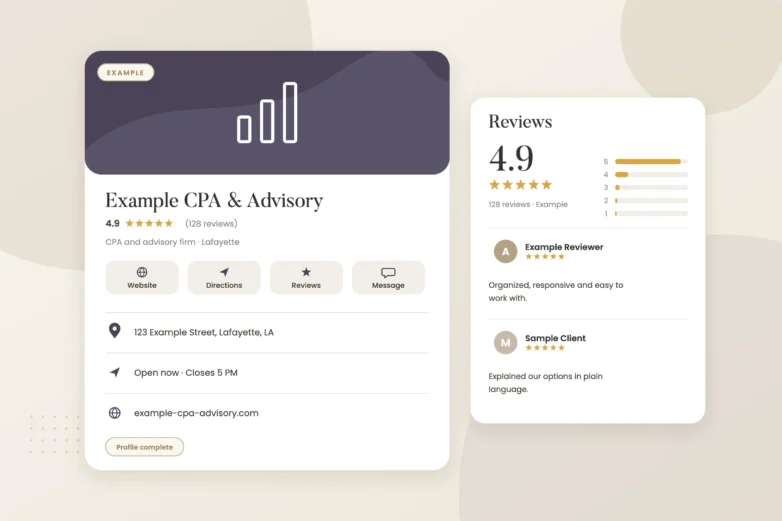
For local businesses, Google Business Profile is often the first impression. Your profile can show up before someone ever reaches your website. Categories, services, reviews, photos, business details, and location consistency can all affect trust. If your business has duplicate listings, outdated phone numbers, missing service details, or inconsistent names across directories, local visibility can suffer.
Google is explicit about this. Its guidance on improving your local ranking weighs relevance, distance, and prominence, and consistent business information across the web feeds directly into prominence (Google Business Profile Help). Reviews matter here too — BrightLocal’s 2025 Local Consumer Review Survey shows the overwhelming majority of consumers read reviews before choosing a local business.
Start by checking how your business appears across the web. Use the free online visibility check to identify listing errors, missing profiles, and inconsistent details. Then connect those fixes to a stronger local SEO strategy.
Location pages and service pages work together
Many businesses either create one generic services page or try to cram every city into one paragraph. Neither approach is ideal. Service pages should explain what you offer. Location or service-area language should explain where you offer it. The best structure depends on competition, geography, search demand, and how people actually look for your business.
For example, a law firm may need practice-area pages supported by Lafayette, Acadiana, and surrounding market language. An insurance agency may need service pages for different types of coverage plus local trust content. A medical practice may need pages for services, providers, conditions, and locations. A professional service business may need pages that explain expertise and industries served.
Google Ads can support SEO when the website is ready
Google Ads can be useful for capturing immediate demand, but ads should not send traffic to a weak page. If the landing page does not match the search, explain the service, build trust, and make the next step clear, clicks can turn into wasted spend. That is why we connect Google Ads with website content, service pages, and tracking.
For competitive industries such as legal, insurance, and medical, ads should be specific. Campaigns should align with service intent, location, call tracking, conversion goals, and clear landing pages. The goal is not to get more impressions. The goal is to earn better inquiries from people who are already looking for the service.
Website content should answer the questions people search
Your website should act like a helpful guide. It should answer what you do, who you help, where you work, what makes you credible, what happens next, and what someone should know before contacting you. Search engines reward clarity because clear content helps users.
Strong website content includes a homepage, services page, service-specific pages, industry or audience pages, FAQs, case studies, blog posts, and a contact path. The pages should link to one another naturally. A blog about local SEO should link to local SEO services. A law firm article should link to law firm marketing. A medical practice page should link to website design, content, and strategy when relevant.
What industries benefit most from this approach?
This system works especially well for businesses where clients compare before contacting. Abode focuses on law firms, insurance agencies, medical practices, physical therapy and wellness clinics, and professional service businesses. These industries need visibility, but they also need credibility. Ranking is only useful if the page helps people feel confident enough to call.
We also think carefully about market conflicts. If we are helping a firm compete in a specific niche and area, we do not want to reuse the same strategy for a direct competitor nearby. That matters in local SEO because the goal is to build a defensible market position.
AI search makes local clarity more important
AI-driven search adds another reason to clean up your website and online presence. Tools like Google AI Overviews, ChatGPT, Gemini, and Perplexity need clear information to understand and summarize businesses. If your site does not clearly explain your services, locations, and authority, you may be harder to surface in AI-style answers.
That is why AI search optimization starts with the same fundamentals as local SEO: consistent business details, strong service pages, helpful content, internal links, reviews, and clear entity signals.
Start with visibility before spending more money
Before you add more posts, ads, or design changes, look at the foundation. Is your Google profile complete? Are your listings accurate? Do your service pages target real searches? Does your website mention the towns and parishes you serve? Are your calls to action clear? Do your blogs link to services? Does your content help people trust you?
If the answer is unclear, start with a strategy review. Abode can identify what is holding back your local search presence and what should be fixed first. Book a strategy call to map the next step.
Related Abode resources
- Local SEO & Visibility
- Google Ads & Lead Flow
- Website Design & Copy
- Content & Social Media
- AI Search Optimization for Local Businesses
Frequently Asked Questions
What is local SEO for a Louisiana business?
Local SEO is the practice of optimizing a Louisiana business's online presence — Google Business Profile, website content, citations, reviews, and schema markup — so the business shows up in Google's local Map Pack and city-specific organic results. For service businesses, local SEO drives more new client inquiries than any other digital channel.
Which is more important: Google Maps or Google Ads for a Louisiana business?
Google Maps (organic local) compounds over time and keeps working without ongoing spend; Google Ads delivers fast results but stops the day you stop paying. Most small Louisiana businesses should treat Maps/local SEO as the foundation and use Google Ads strategically for high-intent practice areas or services where the cost per acquisition is justified.
How long does local SEO take to work in Louisiana?
Most Louisiana businesses see meaningful Map Pack movement within 60–120 days of starting a focused local SEO program, and Page-1 organic for competitive city-and-service keywords within 4–9 months. Smaller markets like Thibodaux or Morgan City move faster than Lafayette or Baton Rouge.
Want to see where your business stands today?
I take one client per niche, per market. Before we ever talk about working together, I’ll send you a free visibility audit — a focused review of your website, Google presence, reviews, and how you currently show up in local search. You’ll get a one-page summary of what’s working and what’s missing, whether you hire me or not.
You can also see what current and past clients say about working with me.
— Kayce Sadler, Abode Marketing | Youngsville, Louisiana