After Tropical Storm Arthur: What Louisiana Insurance Agencies Should Publish This Week (Without Sounding Salesy)
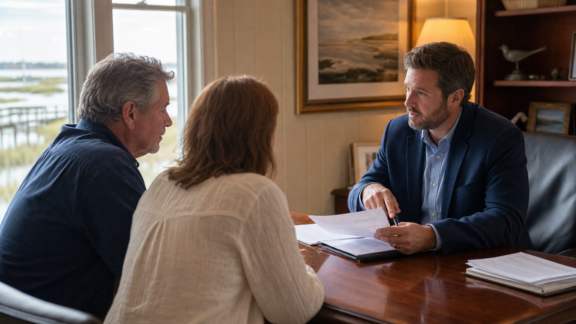
If you’re an independent insurance agency in Louisiana, you’ve felt it already: the phone rings differently after a storm. In Houma and Thibodaux, it’s usually “Do I file this?” and “What do I do first?” In Lake Charles, it’s “Is this covered?” And in Lafayette, it’s “Can you help me understand what to expect?”
Here’s the pattern I see every year: agencies that publish clear, practical guidance right after a storm don’t just look more helpful — they get remembered. And that memory becomes referrals, reviews, and stronger local search visibility in the weeks that follow.
This week, Tropical Storm Arthur gave Louisiana agencies a chance to show up like the expert you already are — without turning your website into a sales pitch.
1) Publish a “what to do next” storm page (and keep it simple)
Most agencies already explain claims at the kitchen-table level. The marketing mistake is assuming that explanation only belongs in a phone call.
Create one dedicated page (or blog post) that answers the first five questions your team is getting right now:
- What information should I gather before I call?
- What photos and documentation matter?
- What’s the order of operations (safety, mitigation, claim, adjuster)?
- What if I can’t reach my adjuster yet?
- What should I avoid (bad contractors, throwing things away too early, etc.)?
You don’t have to reinvent it — the Louisiana Department of Insurance Storm Resource Center lays out the categories of guidance consumers need before, during, and after a storm, and it’s a solid checklist for structuring your own page.
On your site, place that page in your main navigation for a few weeks, then move it into a “Resources” or “Storm Help” section so it’s still easy to find next season.
2) Add one section that clears up flood vs. homeowners confusion
This is the moment to be clear and kind. After storms, people mix up wind, water, and surge — and they’re often stressed, displaced, and trying to make fast decisions.
A simple, non-alarmist paragraph on your storm page can prevent a ton of confusion:
Example language: “Flood coverage is typically handled under a separate flood policy, while homeowners policies often cover different types of storm damage. If you’re not sure which policy applies, call our office and we’ll help you sort it out.”
If you want an authoritative reference behind that point, FEMA’s overview explains that flood insurance is separate from most homeowners insurance and is designed to help families and businesses recover faster after floodwaters recede.
From an SEO standpoint, this section also naturally earns long-tail searches like “Do I need flood insurance in Louisiana?” and “What does homeowners insurance cover after a storm?” — especially in coastal and flood-prone markets.
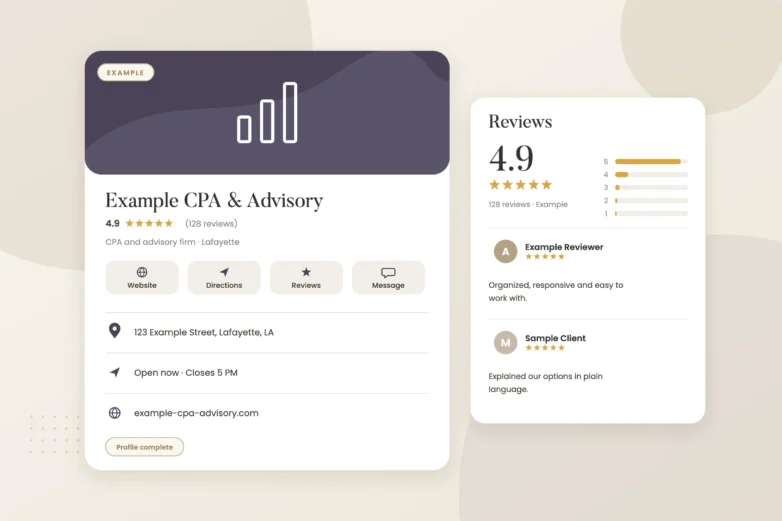
3) Update your Google Business Profile like it’s a storm hotline
When weather hits, a lot of your “marketing” happens in Google — before anyone ever reaches your website.
Here’s what I recommend agencies in Baton Rouge, Lafayette, and Lake Charles tighten up within 24 hours of a major event:
- Hours: confirm they’re accurate (and use special hours if needed).
- Phone routing: make sure calls land where you actually have capacity.
- Posts: publish one short “storm help” post linking to your storm page.
- Q&A: add 3–5 FAQs you keep answering on the phone.
If you need the official feature guidance, Google’s documentation is the cleanest reference: Google Business Profile Help.
And yes — this matters for local visibility. When Google sees consistent activity, accurate info, and real engagement, you’re less likely to look “closed” or “stale” during the exact week people are searching for help.
4) Use reviews as your trust signal (and respond fast)
Storm season is emotional. People aren’t just shopping for a policy — they’re looking for someone who will answer the phone, explain the process, and stay steady when things are messy.
This is where your reviews do heavy lifting. BrightLocal’s 2026 research found that 97% of consumers read reviews for local businesses, and it also highlights how much recency and owner responses influence trust.
Two practical moves for agencies:
- Ask for reviews from claim-support moments: not just at renewal. (Think: “Thanks for helping us understand the next step.”)
- Respond quickly and specifically: even a short, personalized reply signals you’re present and accountable.
If you want to build a system around this, that’s exactly what we do through reputation and reviews support — because reviews aren’t just “nice,” they’re a core local ranking and conversion factor.
5) Don’t bury the “who we help” pages — strengthen them
After a storm, people don’t only search your agency name. They search needs:
- “homeowners insurance agency near me”
- “flood insurance Thibodaux”
- “business insurance broker Lake Charles”
So your site needs service pages that match real intent. If your agency is trying to grow in Louisiana markets, start with a strong “what we do” foundation and build from there: insurance agency marketing content, clear navigation to local SEO, and a couple of high-utility FAQs (coverage questions, claims expectations, documents to bring).
For proof that this kind of structure works, take a look at how we approach visibility and trust for agencies in our Coastal Insurance case study.
What I’d do this week if I were running your agency
If you want a simple checklist for the next 48 hours, here it is:
- Publish (or update) one “Storm Help” page and pin it to your menu.
- Add one flood vs. homeowners clarity paragraph (without fear tactics).
- Post one Google Business Profile update pointing to that page.
- Ask for 3–5 fresh reviews from recent claim-support conversations.
- Make sure your service pages clearly state who you help in each Louisiana market you serve.
If you want me to review your website, Google Business Profile, and service pages through a Louisiana-storm-season lens, start with our free visibility audit. Or call (337) 270-5011 and I’ll tell you exactly what I’d fix first to make your agency easier to find, easier to trust, and easier to contact when it matters most.
Frequently asked questions
What should a Louisiana insurance agency post right after a storm?
Publish one simple “what to do next” page that answers the first five questions your team is already getting on the phone: what information to gather, what photos and documentation matter, the order of operations, what to do if you cannot reach an adjuster yet, and what to avoid. Keep it calm and practical, pin it to your menu for a few weeks, then move it into a “Storm Help” section so it is easy to find next season.
Is it okay to market my agency during a storm without seeming opportunistic?
Yes — if you lead with help instead of a pitch. The agencies people remember after a storm are the ones who published clear, useful guidance when everyone else went quiet. Focus on clarifying coverage and next steps, skip the fear tactics and hard sell, and the trust you build turns into referrals, reviews, and stronger local visibility in the weeks that follow.
How does a storm-help page help my local search visibility?
A plain-language page naturally earns long-tail searches like “do I need flood insurance in Louisiana?” and “what does homeowners insurance cover after a storm?” — especially in coastal and flood-prone markets. Paired with an active Google Business Profile and fresh reviews, it signals to Google that you are open, accurate, and engaged during the exact week people are searching for help.
How fast should I update my Google Business Profile after a major storm?
Within about 24 hours. Confirm your hours (use special hours if needed), make sure calls route to where you actually have capacity, publish one short “storm help” post linking to your storm page, and add three to five of the FAQs you keep answering on the phone. When Google sees accurate information and real activity, you are far less likely to look closed or stale right when it matters most.