How Do You Market a Cash-Based Physical Therapy Practice?
Last updated: November 12, 2026 · By Kayce Sadler, Founder & CEO, Abode Marketing
Market to the problem and the activity, not the insurance card. Cash-pay patients search for things like “physical therapy for runners” or “PT without insurance,” so build pages and profile services around those, explain what a visit actually includes, and earn reviews that describe the experience in specifics. Then make sure your pricing notices, Medicare policy, and testimonials all follow the rules before you spend a dollar on ads.
Key takeaways
- Cash-pay patients usually search by problem, sport, or activity (“PT for golfers,” “physical therapy without insurance”), so each of those deserves its own page.
- Sell the format, not the result: length of visit, one-on-one time, same therapist each visit. Avoid any promise about how a patient will feel or recover.
- Under the No Surprises Act, providers must post a notice that self-pay patients can get a Good Faith Estimate on the website and in the office, and send written estimates on a set timeline.
- APTA says physical therapists can’t opt out of Medicare, so a cash-only clinic needs a clear, accurate answer for patients who are on Medicare.
- The FTC’s 2024 rule bans buying reviews or conditioning a perk on a positive one; its guidance also warns against asking only the patients you expect to be happy.
How do cash-pay patients search differently from insured patients?
An insured patient often starts with a referral slip and a plan directory. A cash-pay patient usually starts with a problem and a goal: a runner whose knee flares at mile four, a weekend golfer, a CrossFit member, a new mom. Their searches sound like “physical therapy for runners Lafayette,” “PT without insurance near me,” or “sports physical therapy no referral.”
That changes what you build. Instead of one “Services” page, you want a page for each problem or population you see most, written the way that person talks. A page called “Physical Therapy for Runners” with a plain description of how your evaluation looks at running form will match those searches far better than a list of CPT-style service names.
In Louisiana, direct access helps here. Under La. R.S. 37:2418, a physical therapist with a doctorate in physical therapy or five years of licensed clinical practice can begin treatment without a prescription or referral, with a required referral if there’s no measurable or functional improvement after 30 calendar days. Say that accurately, and don’t turn it into “no doctor needed, ever.”
How do I explain the value without promising results?
Describe the format, because that’s what a cash-pay patient is buying. How long is a visit? Is it one-on-one with a licensed PT the whole time? Will they see the same therapist every visit? What happens at the first appointment? Those are facts you can stand behind.
What you shouldn’t do is promise outcomes: “back to running in four weeks,” “fewer visits than insurance clinics,” “get out of pain fast.” The FTC’s Endorsement Guides (16 CFR 255.2) say a testimonial about one person’s result is read as what others can generally expect, and the FTC’s Health Products Compliance Guidance says consumer testimonials are never enough to back up a health claim. Even “results not typical” doesn’t fix that.
Should a cash-based PT clinic publish its prices?
That’s a business decision, and I don’t think there’s one right answer. Publishing a visit fee filters out people who were never going to pay it and can shorten the first call. Leaving it off lets the front desk explain packages and what’s included.
What isn’t optional is the Good Faith Estimate. The No Surprises Act requires providers to tell uninsured and self-pay patients a written estimate is available, and APTA’s practice advisory notes the notice has to be posted on your website and in the office where scheduling or cost questions come up. If a visit is scheduled at least three business days out, the estimate is due within one business day of scheduling. APTA’s advisory dates from December 2021, when the rule took effect in January 2022, so confirm the current CMS requirements with your billing advisor.
If you give patients superbills to submit to their own plans, describe it carefully: “We can provide a superbill you can submit to your insurance; whether and how much your plan reimburses depends on your plan.” Never imply they’ll get money back.
What do I tell patients who are on Medicare?
This is the part cash-based clinics most often get wrong on their websites. APTA states plainly that “the private contracting rules do not apply to PTs,” meaning physical therapists can’t opt out of Medicare the way some physicians can. APTA also says a PT who provides Medicare-covered services and privately bills a beneficiary is violating the law, and that a non-enrolled PT must stop treating covered services for a patient who becomes a beneficiary, or enroll.
So your FAQ should give one accurate answer to “Do you see Medicare patients?” whatever your setup is, written with your compliance advisor. If you run campaigns that reach people 65 and older, that answer has to be in place first. For Louisiana PT owners watching Medicare rules, our post on 2026 Medicare thresholds and PT marketing is a good companion read.
Where do cash-pay referrals actually come from?
Relationships, mostly. Running clubs, gyms, high school and club coaches, golf pros, yoga studios, and personal trainers see the people you want to help before anyone else does. Teach a warm-up clinic or give a short injury-prevention talk. Keep it educational.
One caution: don’t pay anyone per referral or give gifts tied to sending you patients without talking to a healthcare attorney first. Those arrangements can create problems even when no insurance is billed.
Reviews are the other half. A review that says “Great PT!” helps a little. A review that says “45 minutes with the same therapist every visit, and she watched me run on the treadmill” tells the next cash-pay patient exactly what they’re paying for. Ask every patient the same way, and let them write what they want. The FTC’s consumer review rule (16 CFR Part 465, effective October 21, 2024) bans buying reviews and offering perks conditioned on a particular sentiment, and staff or family reviews need a clear disclosure.
How is marketing a cash practice different from an insurance-based one?
| Area | Insurance-based clinic | Cash-based clinic |
|---|---|---|
| How patients find you | Referrals, plan directories, “PT near me” | Problem and activity searches, coaches, gyms, word of mouth |
| Key pages | Insurance accepted, locations, hours | One page per problem or population, “what a visit includes,” FAQ on payment |
| Core message | “We take your plan and can see you soon” | “Here’s exactly what your time with us looks like” |
| Reviews that help most | Friendly staff, easy scheduling | Specific details about time, attention, and the same therapist |
| Pricing | Copays set by the plan | Your choice to publish or not, plus the required Good Faith Estimate notice |
| Medicare | Bill Medicare as an enrolled provider | Needs a written, compliance-reviewed answer, since PTs can’t opt out |
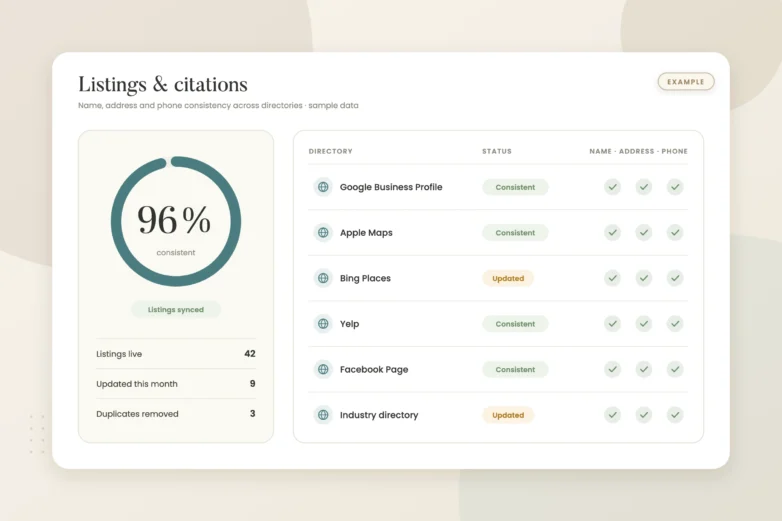
| Directory listings | Must match every plan directory | Make sure no insurer directory still lists you as in network if you’ve left |
What we’d check first
- Your Google Business Profile category and services. Google’s guidance is to pick the category that completes “This business IS a,” and keep it specific. Then add services named the way cash-pay patients search: running injuries, golf, post-partum, and so on.
- Your problem and activity pages. Does each one explain what the visit includes, without any promised result, and does it load fast on a phone with a clear way to request a visit?
- The payment pages. Is the Good Faith Estimate notice posted? Is superbill language careful? Is there an accurate Medicare answer?
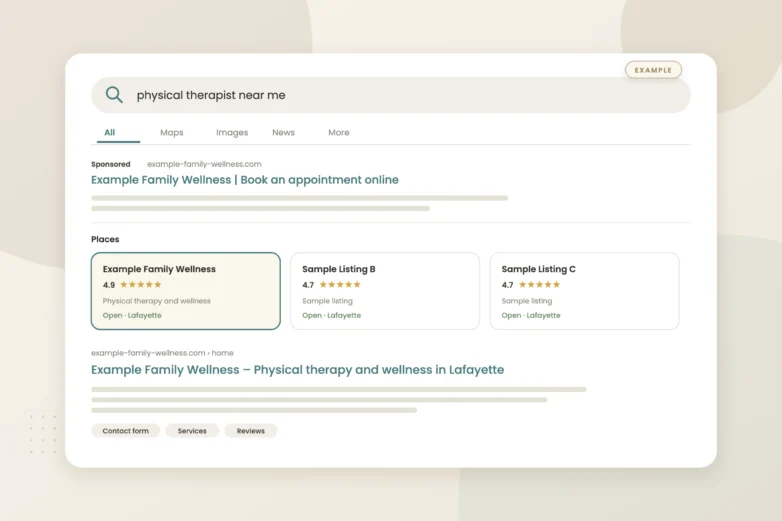
- Your reviews next to the three map-pack clinics: count, rating, how recent, and whether yours describe the experience in specifics.
- Old insurer directory listings and other citations, if you’ve gone out of network. A stale “in network” listing sends the wrong patients and frustrates them.
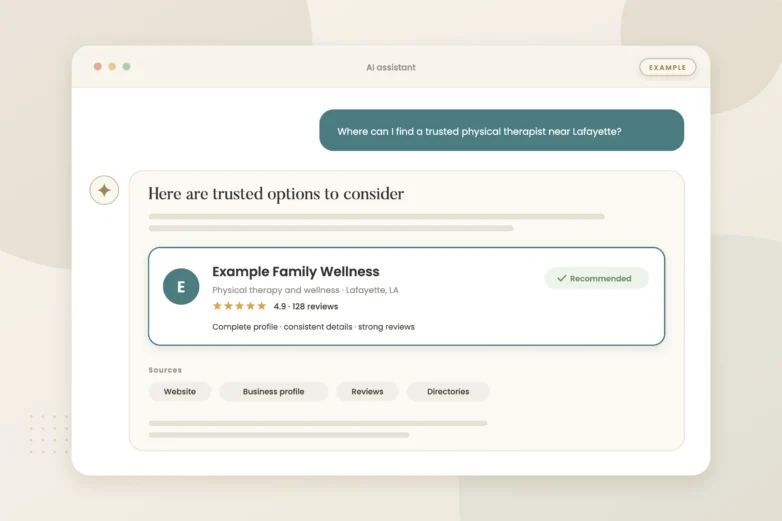
- What ChatGPT and Google AI Overviews say when someone asks for physical therapy without insurance in your city, and whether your ChatGPT business profile is claimed.
More on building a Louisiana PT clinic’s pipeline is in our guide to physical therapy marketing in Louisiana, and our page for PT and chiropractic practices in Lafayette explains how we work with clinic owners.
If you’d like a second set of eyes, our free visibility audit looks at your Google profile, reviews against the clinics around you, your listings, your website’s problem pages and payment information, and what AI tools tell people about your practice.
More owner questions we’ve answered: Can Patients See a PT Without a Referral in Louisiana? · Do Healthgrades, Zocdoc, Vitals and WebMD Profiles Matter? · How Long Does Local SEO Take to Work? An Honest Timeline
Frequently asked questions
Do I need a referral source to start a cash-based PT practice?
Not legally in Louisiana, as long as the therapist meets the direct access requirements in La. R.S. 37:2418, but most cash clinics still build referral relationships with coaches, trainers, and physicians. Those relationships tend to send patients who already understand the value of one-on-one care. Keep them educational and never pay per referral.
Can I run Google Ads for a cash-based physical therapy clinic?
Yes, as long as your ads and landing pages follow Google’s healthcare policies and avoid health claims you can’t support. Ads aimed at problem searches like running or golf injuries usually make more sense for a cash clinic than broad ‘PT near me’ terms.
Is it okay to show patient testimonials on a cash PT website?
Testimonials can be used, but they need a written HIPAA authorization if they use patient information in marketing, and they shouldn’t imply a typical result you can’t back up. The FTC treats a single patient’s outcome as a claim about what others can expect. Stories about the experience, like time with the therapist, are safer than stories about recovery.
What should our front desk say when someone asks if we take insurance?
Give a short, honest answer: you’re out of network, you can provide a superbill if they want to submit it to their plan, and reimbursement depends on their plan. Then explain what a visit includes and mention that a Good Faith Estimate is available. Avoid guessing what their plan will pay.
Should a cash-based clinic still claim insurer directory listings?
If you’ve left a network, check that insurer directories no longer show you as in network. Patients who start in their plan’s portal and find you listed will expect in-network billing. Your Google profile, website, and health directories should all say the same thing about how you’re paid.
Sources
- APTA: Cash-Based Practice and Medicare — Private contracting (opt-out) rules don’t apply to PTs; privately billing beneficiaries for covered services violates the law; non-enrolled PT must stop or enroll
- APTA: Practice Advisory, Good Faith Estimates for Uninsured or Self-Pay Patients (Dec 2021) — Post GFE notice on website and in office; timing of written estimates; effective Jan 1, 2022
- eCFR: 16 CFR Part 255, Guides Concerning Use of Endorsements and Testimonials in Advertising — 255.2: consumer endorsements read as typical results; endorsements aren’t scientific evidence
- Federal Register: Trade Regulation Rule on the Use of Consumer Reviews and Testimonials (16 CFR Part 465) — Effective Oct 21, 2024; bans fake reviews, buying reviews, undisclosed insider reviews, review suppression
- FTC: Health Products Compliance Guidance (Dec 2022) — Testimonials never sufficient to substantiate health claims; ‘results not typical’ doesn’t cure
- Louisiana Legislature: R.S. 37:2418 — Direct access: DPT or five years’ experience; refer after 30 calendar days without measurable or functional improvement
- Google Business Profile Help: Choose a business category — Pick specific categories that complete ‘This business IS a’; don’t use categories as keywords