Local SEO for Louisiana Medical Practices
If you run a medical practice in Louisiana — a family clinic in Lafayette, a specialty group in Baton Rouge, a dental or med-spa office on the Northshore — almost every new patient starts the same way: they pull out their phone and search. “Primary care near me.” “Best dermatologist in Lafayette.” “Walk-in clinic open now.” What Google shows in the next three seconds decides who gets the call. Local SEO for Louisiana medical practices is the work of making sure that answer is you.
One client per niche · Month-to-month · You own everything
Or email me directly: kayce@abodetheagency.com
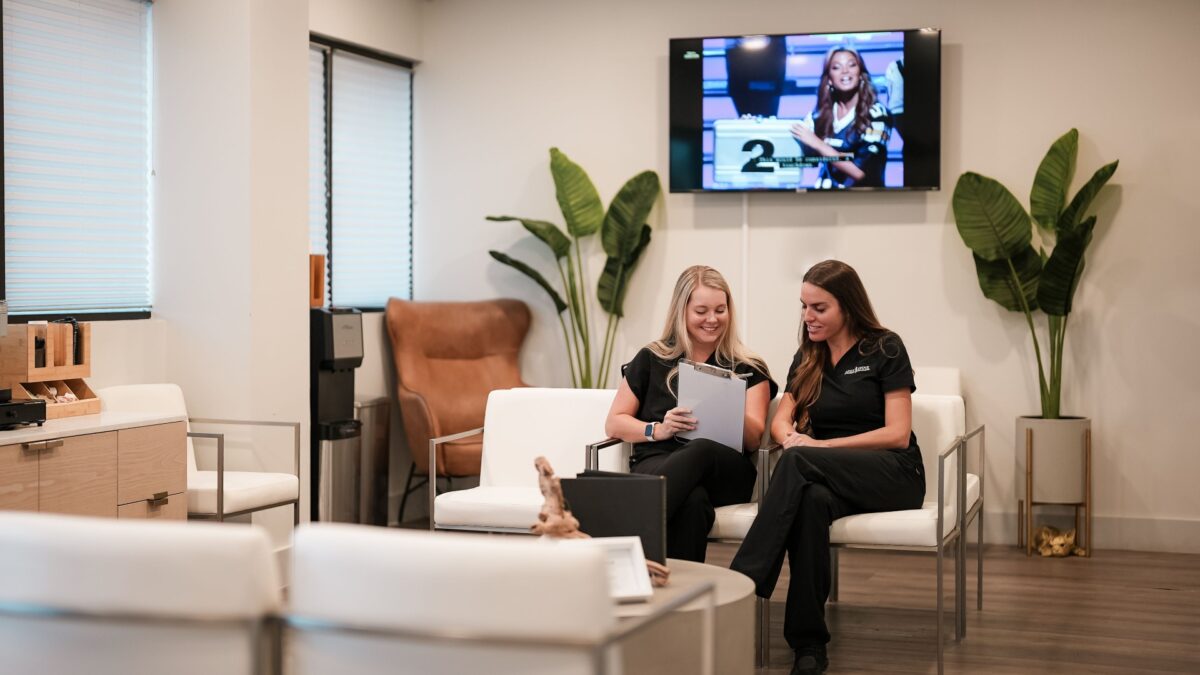
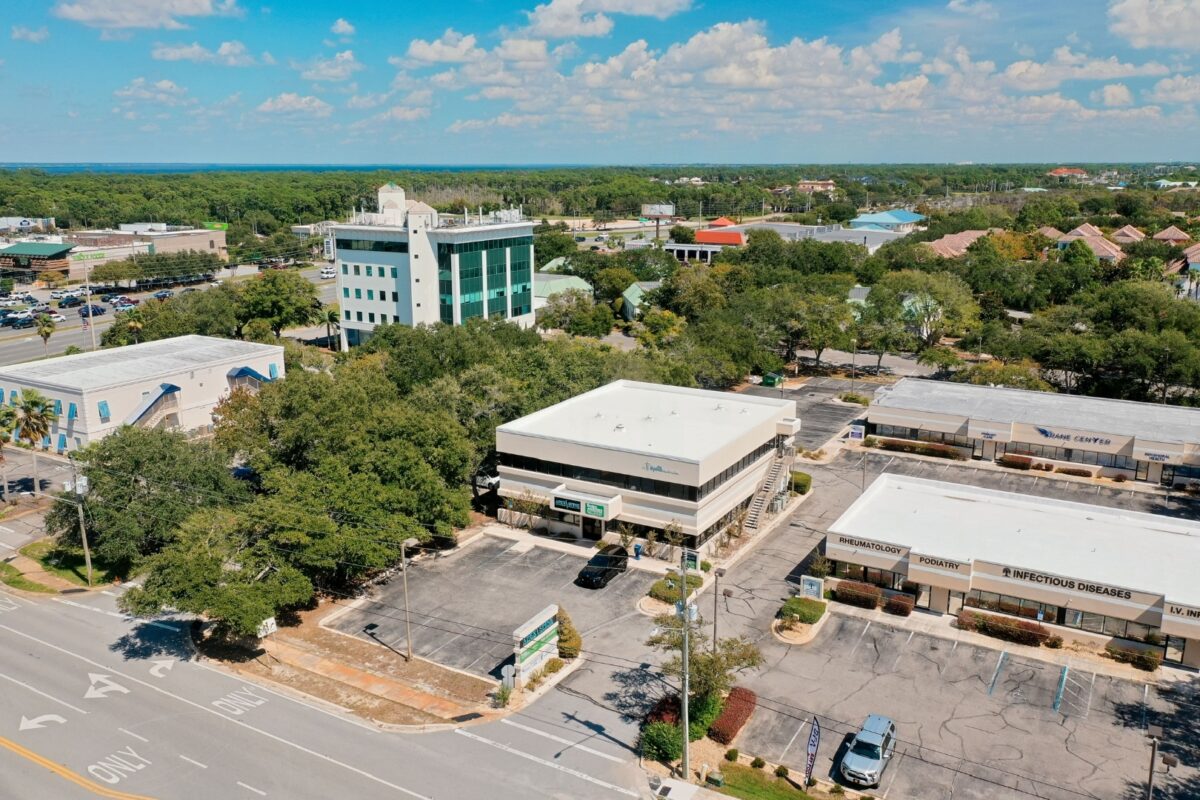
Apex Spine and Pain Center, a neurosurgeon-led Abode client.
What our clients say.
Quoted word for word from the business owners we work with.
“I had a wonderful experience working with Kayce on social media marketing for my law firm! She was incredibly professional, warm, and easy to work with throughout the entire process. She consistently went above and beyond, was always willing to help, and made everything feel seamless. I really appreciated her creativity, responsiveness, and genuine dedication to helping my business. I would highly recommend Kayce to anyone looking for someone who is not only talented at what they do but also a pleasure to work with!”
Camerin Dixon
Owner, Dixon Injury Law, Miramar Beach, FL
“If you own a small business and need help in marketing and social media you have got to give Kayce a call. Medical Offices, Homebuilders, Title Cos, Real Estate firms and more. I hired Kayce last Spring and our experience has been nothing short of amazing. I own Coastal Insurance in Florida.”
Grant Blackwell
Owner, Coastal Insurance, Miramar Beach, FL
“Our law firm has been working with Abode Marketing since February of 26. This company has an outstanding marketer in Kayce Sadler, who has great digital marketing expertise. She has been hard-working, creative, and effective!”
Joseph Kopfler
Owner, Kopfler & Hermann Law, Houma, LA
This page walks through exactly how local search works for healthcare, what actually moves the needle in 2026, and how Abode Marketing gets Louisiana practices to the top of the map and holds them there. If you’d rather just see where you stand today, grab a free medical practice visibility audit and we’ll show you exactly where you rank right now.

Why local SEO decides who fills the schedule
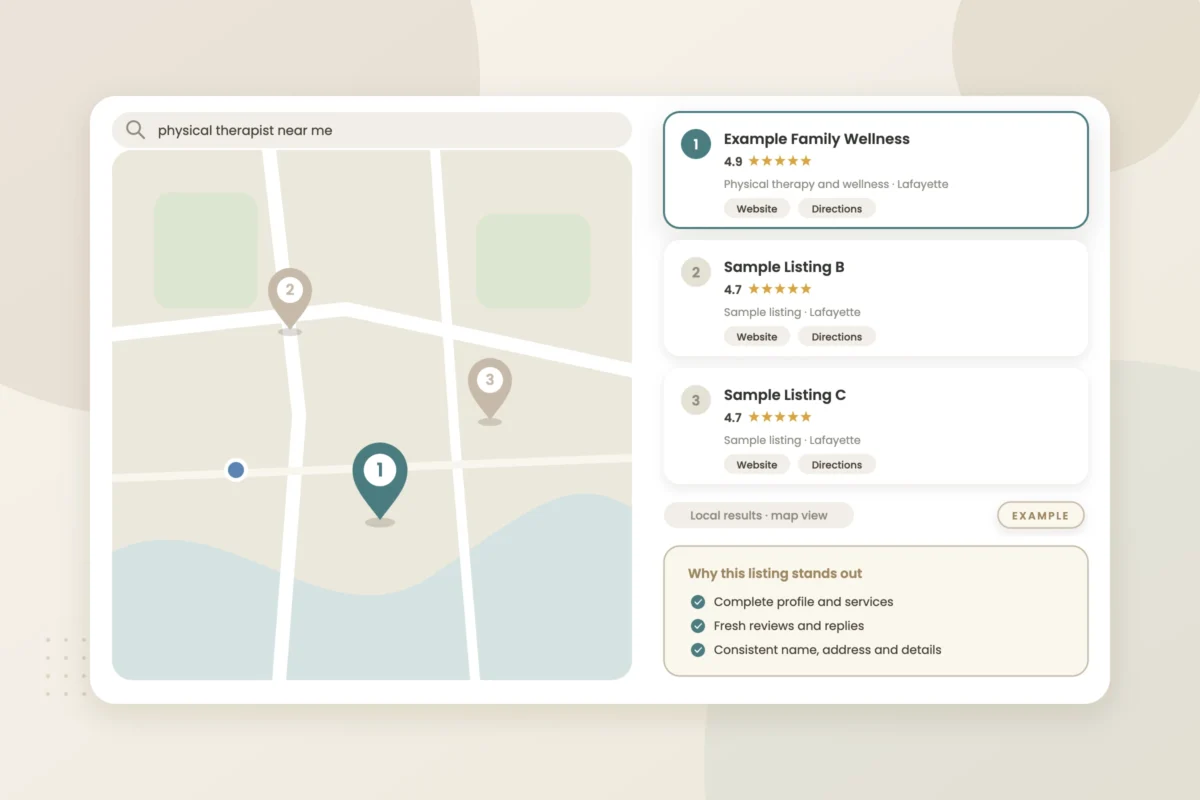
When a patient searches for care nearby, Google splits the page into two things that matter: the map pack (the three practices shown on the little map at the top) and the organic results below it. The map pack gets the overwhelming majority of clicks and calls, because it sits above everything and shows your reviews, hours, and a tap-to-call button. If your practice isn’t in that top three, most patients never scroll far enough to find you — they book with someone who is.
Healthcare is one of the most competitive local categories there is, and it’s also one of the most local. Nobody drives an hour for a strep test. That’s good news for a well-optimized practice: you’re not competing with the whole state, you’re competing with the handful of clinics in your actual service area. Win your town and the surrounding parishes and you win the patients who are ready to book today. That’s the entire game of local SEO, and it’s very winnable when it’s done right.
The five things that actually move medical rankings in 2026
1. A fully built, correctly categorized Google Business Profile
Your Google Business Profile is the single biggest lever in local search — it’s what feeds the map pack. Most practices leave it half-finished, and it costs them the top spot. A complete profile earns dramatically more clicks than a bare one. That means the right primary category (“Medical clinic,” “Dermatologist,” “Pediatrician” — not a vague catch-all), a full set of secondary categories for every service line, every service listed out, real hours including holidays, insurance and accessibility attributes filled in, and current photos of the office and team. Exact name, address, and phone number — matched everywhere online — is non-negotiable, because Google cross-checks it constantly.
2. Reviews — volume, velocity, and responses
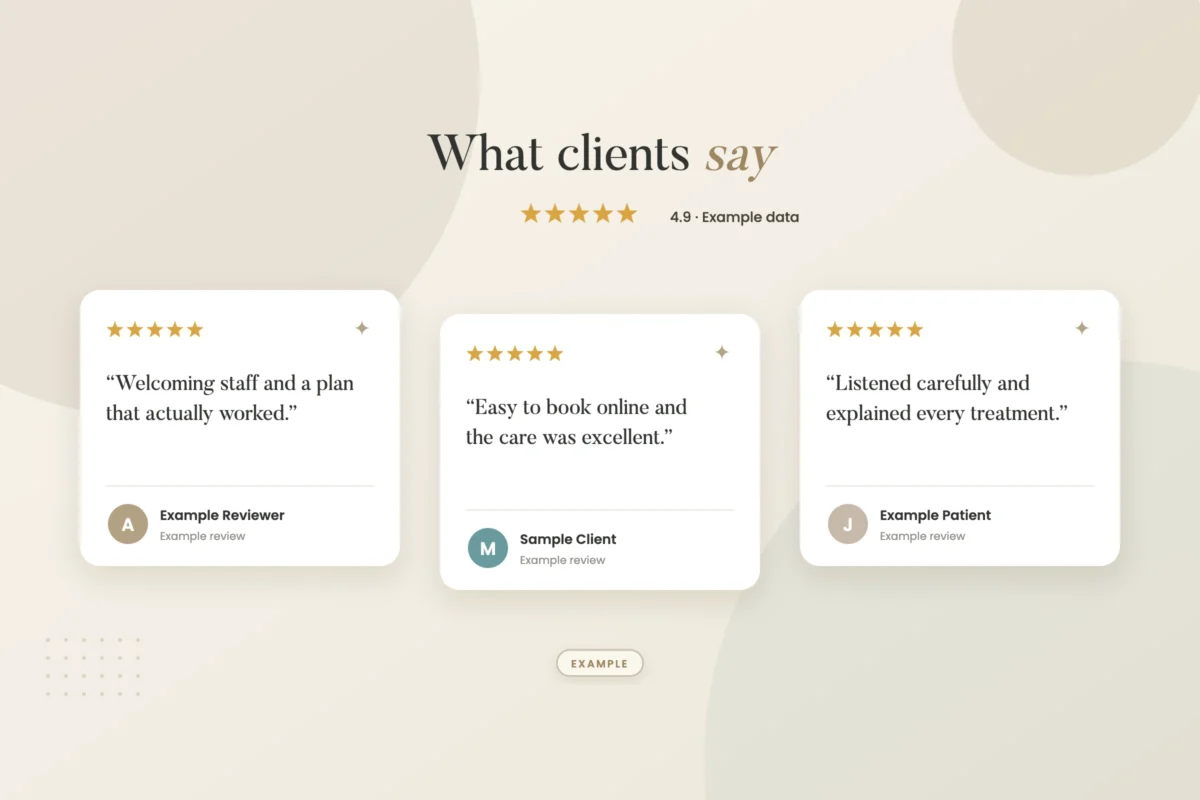
Reviews are now one of the heaviest ranking factors in the map pack, and they’re the deciding factor for patients choosing between two clinics. It isn’t just your star rating: Google weighs how many reviews you have, how recently they came in, and whether you respond. A practice getting a few fresh reviews every week will out-rank one with an older, larger pile. The fix is a simple, HIPAA-conscious system that asks every happy patient for a review at the right moment and routes any unhappy feedback to you privately first. This is the highest-ROI move most practices can make — we build the whole engine as part of reputation and review management.
3. Service and condition pages that answer real patient questions
Patients don’t search for “medical practice.” They search for the symptom, the condition, or the specific service — “plantar wart removal Lafayette,” “IUD insertion near me,” “pediatric asthma doctor.” Practices that rank have a real page for each core service, written in plain language, that answers the questions a patient actually types. One thin “Services” page listing everything in a bullet list won’t do it. Each page needs a clear title, an honest explanation of what to expect, and structured content search engines can understand. This is also what gets you cited in Google’s AI answers and in ChatGPT — the tools patients increasingly ask before they ever open a maps app.
4. Consistent citations across the sites Google trusts
Google confirms your practice is real and located where you say by cross-referencing directories — Healthgrades, Vitals, Zocdoc, your insurers’ find-a-provider tools, the Chamber, Apple Maps, and dozens more. When your name, address, and phone number don’t match across those, Google loses confidence and your rank suffers. Cleaning up and standardizing those listings is unglamorous but it’s foundational, especially for practices that have moved, rebranded, or added providers over the years.
5. A fast, mobile-first website with the right structure
Nearly all of these searches happen on a phone, often by someone who doesn’t feel well and has no patience for a slow, clunky site. Page speed, a clean mobile layout, easy click-to-call and online-booking buttons, and the right technical markup all feed both your rank and whether the visitor actually books. A practice that ranks but loses people at a broken booking form hasn’t gained anything — ranking and conversion have to be solved together.
What makes Louisiana different
Marketing a practice here isn’t the same as marketing one in Dallas or Atlanta. Louisiana’s search landscape is shaped by its parishes and its towns — patients search by parish and by community, not just by city, so “Acadiana” and specific towns like Youngsville, Broussard, and Carencro matter as much as “Lafayette.” Populations are spread across smaller communities where a practice that owns the local map pack can dominate an entire corner of a parish with far less competition than a metro fight. And patients here still choose care on trust and word of mouth — which is exactly why a strong, current review presence carries so much weight. A generic national playbook misses all of this. Local, parish-aware optimization wins.
How Abode gets Louisiana practices to the top
We run the same proven system for every practice, tuned to your specialty and your service area. First we audit where you actually stand — your rank for every money term, your Google Business Profile completeness, your review gap versus the practice currently beating you, your site health, and how you show up in AI answers. Then we fix the foundation: a hard-optimized profile, cleaned-up citations, and a fast site built to convert. We build out the service and condition pages patients are really searching for, add the structured data that earns rich results and AI citations, and stand up a review engine that keeps fresh reviews coming in every week.
It’s the same approach that took Apex Spine and Pain Center from zero walk-ins to five a day, and the same local-search foundation behind every practice we work with. If you also serve patients through movement and rehab, our physical therapy and chiropractic marketing runs on the same engine, and law firms can see the mirror version on our local SEO for Louisiana law firms page.
Ready to see where you rank?
The fastest way to start is to find out exactly where your practice stands today. Pull a free visibility audit — or, if you want the medical-specific version, the free medical practice visibility audit — and we’ll show you your rank, your review gap, and the three moves that would help most. When you’re ready to talk strategy, book a strategy call and we’ll map out how to get your practice to the top of local search. You can also see the full picture of our medical practice marketing for Lafayette and Acadiana.
Keep exploring.
Frequently asked questions
How long does local SEO take for a medical practice?
Google Business Profile improvements and citation cleanup can lift map-pack rankings within a few weeks. Competitive service-term rankings and building a steady review lead over a rival usually take a few months of consistent work. The practices that win treat it as an ongoing program, not a one-time project — because your competitors don’t stop either.
Is medical local SEO HIPAA compliant?
Yes, when it’s done correctly. Everything we do — review requests, profile optimization, content, and tracking — is built to respect patient privacy. Review-request systems are designed so patients volunteer their own feedback without you ever sharing protected health information, and we never publish anything that identifies a patient without explicit consent.
What’s the difference between local SEO and Google Ads for a practice?
Google Ads buys you visibility at the top of search for as long as you pay; the moment you stop, it’s gone. Local SEO builds an asset you own — rankings, reviews, and a profile that keep working for you month after month. Most practices do best with SEO as the long-term foundation and ads layered on for immediate volume or a new service line.
Do reviews really affect where my practice ranks?
Yes — significantly. Review count, how recent your reviews are, and whether you respond are all among the strongest signals in the local map pack, and for patients choosing a provider, reviews are often the deciding factor. Consistently earning fresh reviews and replying to every one is one of the highest-return things a practice can do.
We have multiple providers or locations — does that change anything?
It does, and it’s an advantage when handled right. Each location needs its own optimized Google Business Profile and location page, and individual providers can rank for their own names and specialties. Done poorly it creates duplicate listings that confuse Google; done well it multiplies your footprint across every community you serve.
How do I know if my practice’s local SEO is working?
By tracking the things that matter: your rank for each money term, how you compare to the practice beating you, and — most importantly — calls and booked appointments from search. We report all of it so you can see the line between the work and the patients. Start with a free medical practice audit to get your baseline.
Does marketing a medical practice raise privacy concerns?
What helps a medical practice show up in Louisiana searches?
Can you help a new provider or location get found?
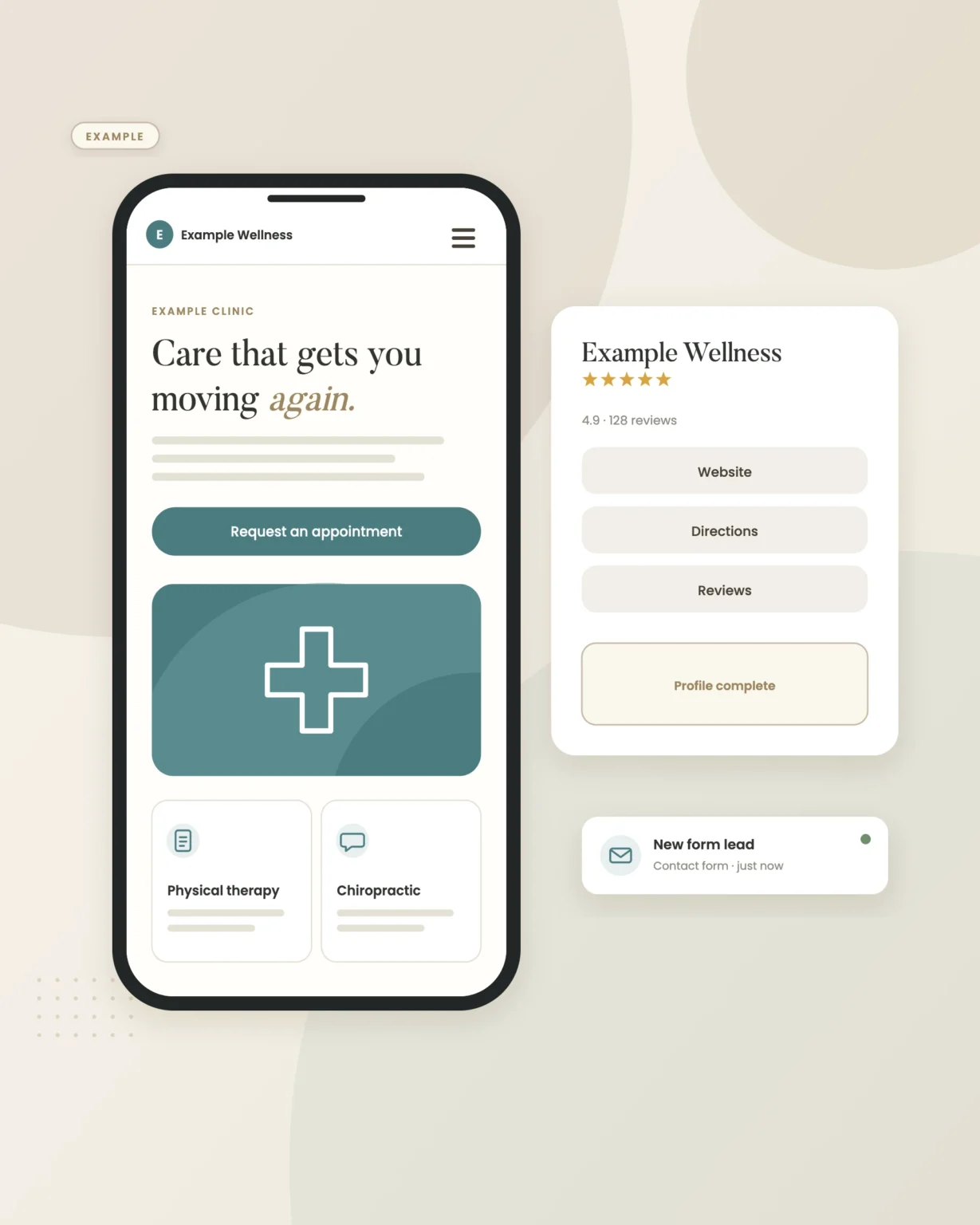
Marketing built for patients who search first.
Patients in Louisiana look up a practice before they book: who the doctors are, what the office looks like, and what other patients say. A clear Google profile, accurate listings, and a website that answers real questions help a new patient feel comfortable before the first visit.
Abode Marketing builds that presence for medical practices, with service and provider pages, review requests that respect patient privacy, listings that match, and real photos of your team and space. We never need patient information to do our work.
See where you stand.
Our free visibility audit shows how you appear on Google, the map pack, and AI search, and what to fix first.
Month-to-month · 30 days’ notice · You own everything we build
Or email me directly: kayce@abodetheagency.com