Should My Insurance Agency Keep Buying Leads or Build Its Own?
Last updated: November 12, 2026 · By Kayce Sadler, Founder & CEO, Abode Marketing
Most independent agencies are better off using purchased leads as a short-term supplement while building owned lead flow: their Google Business Profile, reviews, referrals and a website quote form. Bought leads stop the day you stop paying and are often shared with competitors; owned channels keep working and get stronger. The right mix depends on how fast you can call back and how much consent risk you’re willing to manage.
Key takeaways
- Shared leads go to more than one agent. EverQuote, for example, caps its shared leads at three agents and says other vendors may share with five or more.
- The FCC’s one-to-one consent rule never took effect: the 11th Circuit vacated it in January 2025 and the FCC formally removed it effective Aug. 29, 2025. Consent and Do Not Call rules still apply.
- A Do Not Call exemption based on an inquiry lasts three months and must be an inquiry about the seller’s (your agency’s) products, not just the lead vendor’s form.
- Google Local Services Ads list “Insurance agency” for California and Florida only, so Louisiana agencies can’t use LSAs as an owned-lead shortcut today.
- Track every policy by source in your agency management system before you decide; gut feel about lead quality is usually wrong in both directions.
What’s the real difference between shared, exclusive and aged leads?
A shared lead is one consumer’s quote request sold to several agencies at once. EverQuote’s own explainer says it caps shared leads at three agents and averages 1.7, and notes that other vendors may share a lead with five or more. So when you dial, you’re racing.
An exclusive lead goes to one agent at a time. You still have to reach the person, but you’re not calling against two other agencies in the same minute.
An aged lead is an older inquiry resold after its first sale window. The person may have already bought a policy, and the consent behind the lead is older too, which matters for calling and texting rules.
Why do bought leads feel so hard to close?
Because the shopper filled out a form on a comparison site, not your site. They don’t know your agency’s name, they may have expected an instant online price, and if the lead was shared, other agents are calling too. Contact rates and speed-to-lead become the whole game.
Here’s my take after watching agencies run them: bought leads pay off when you have a producer whose only job is to call within minutes, follow a set cadence, and log every outcome. If leads land in a shared inbox and get called after lunch, you’re mostly paying for frustration.
What changed with TCPA consent, and what didn’t?
The FCC adopted a rule, set to take effect Jan. 27, 2025, that would have required consent to be given to one identified seller at a time, aimed squarely at comparison-shopping lead forms. In January 2025, in Insurance Marketing Coalition v. FCC, the Eleventh Circuit vacated it days before that date. The FCC then published an order in the Federal Register restoring the prior rule text, effective Aug. 29, 2025.
That did not loosen everything. The TCPA’s consent requirements for autodialed, prerecorded and artificial-voice calls and texts still apply, and so does the National Do Not Call Registry. The FTC’s guidance says a seller may call a registered number when it has an established business relationship: 18 months after a purchase or transaction, or three months after the consumer’s inquiry or application about that seller’s products. A form filled out for a lead vendor isn’t automatically an inquiry to your agency.
The FCC has also pushed its “revoke-all” opt-out rule to Jan. 31, 2027 while it reconsiders it. Rules here keep moving, so ask your vendor for the consent language and timestamp behind each lead, and run your calling and texting practices past your compliance counsel or E&O carrier. This is not legal advice.
Who owns the relationship when you buy a lead?
You own the client once they bind, but you never own the channel. The vendor decides price, volume, filters and who else gets the lead. When you stop paying, the flow stops on the same day.
Owned channels work the other way. A review left in March still helps in November. A homeowners page you wrote last year still answers questions tonight. A referral partner (a mortgage lender, a realtor, a CPA) keeps sending people as long as you take care of the ones they’ve sent.
How do bought and owned lead sources compare?
| Source | Who else gets this person? | Consent and DNC exposure | When you stop paying | Compounds over time? |
|---|---|---|---|---|
| Shared leads | Other agents, often within minutes | Depends on the vendor’s form and records | Flow stops | No |
| Exclusive leads | Usually no one, at first | Same vendor dependence | Flow stops | No |
| Aged leads | Possibly many before you | Older consent, higher risk | Flow stops | No |
| Google Business Profile + reviews | The person chose you | They called or wrote you first | Keeps working | Yes |
| Website quote form | The person chose you | Your form, your consent wording | Keeps working | Yes |
| Referral partners and client referrals | Usually just you | Inbound, warm introduction | Keeps working if you nurture it | Yes |
Can Local Services Ads replace lead vendors in Louisiana?
Not right now. Google’s Local Services Ads help page lists “Insurance agency (California and Florida only).” A Louisiana agency can still run regular Google Search ads, but the pay-per-lead LSA format with the Google badge isn’t available for insurance here.
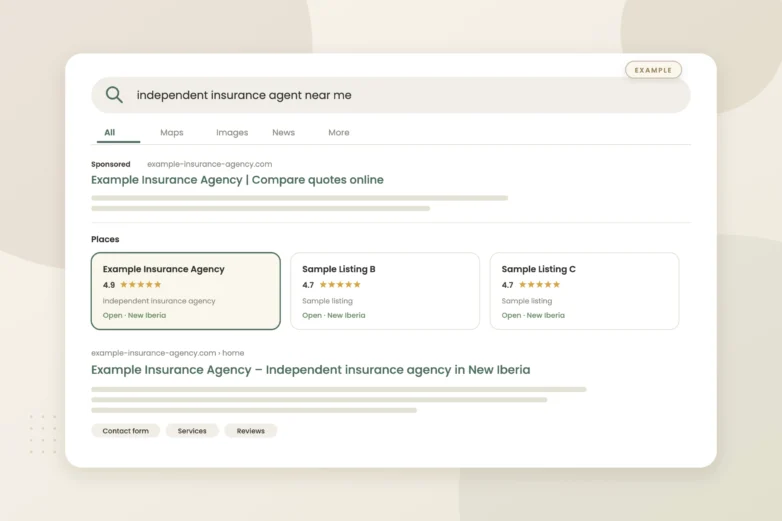
That makes your Google Business Profile even more important, because it’s the free local placement every “insurance agent near me” search sees.
How do I shift from bought leads to owned ones without a revenue dip?
Don’t cancel your lead vendor on Monday. Taper it. Pull 12 months of new business by source from your management system, keep the lead types that actually bind, and move the rest of that budget into owned channels in steps.
Meanwhile, start asking every new and renewing client for a Google review, and add a short quote form to your site with clear consent wording for texts and calls. BrightLocal’s 2026 survey found 45% of consumers now use ChatGPT or other AI tools for local recommendations; those tools lean on exactly the profile, reviews and site content you’re building.
What we’d check first
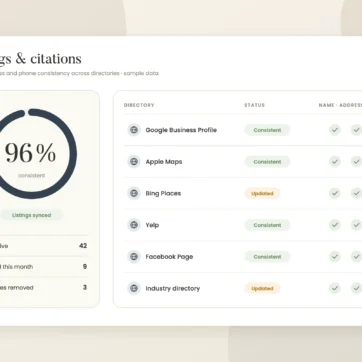
- Calls and website clicks from your Google Business Profile. If your own profile already drives inbound calls, that’s lead flow you’re not counting.
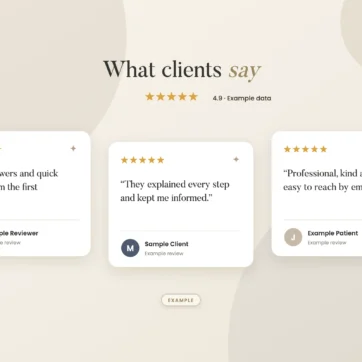
- Your review count and recency against the map pack. The three agencies Google shows in your town set the bar a shopper compares you to.
- Your website quote form. Whether it works on a phone, how many fields it asks for, what consent language it shows, and who gets the notification.
- Who bids on your agency name. Sometimes lead marketplaces or competitors appear above you when people search for you by name.
- AI answers for your city. Whether ChatGPT or Google AI Overviews mention your agency when someone asks for an independent agent nearby, and whether you’ve claimed your ChatGPT business profile.
Related reading
For setting a realistic mix, see how much an insurance agency should spend on marketing. To build the review side of owned lead flow, start with how to get more Google reviews, and for the form itself, our notes on online quotes for Louisiana agencies.
If you want to see how much owned lead flow you already have before cutting a vendor, our free visibility audit checks your profile, reviews, listings, quote path and AI answers, and shows you where shoppers in your area are going instead.
More owner questions we’ve answered: Going From Captive to Independent: How Should Agency Marketing Change? · How Can an Independent Agency Win More Commercial Clients Online? · Fake Google Review From a Former Employee or Competitor? What to Do
Frequently asked questions
Are exclusive insurance leads worth more than shared leads?
Often, because you’re not racing other agents, but only if you call fast and follow up several times. Compare cost per bound policy, not cost per lead, before deciding. Your own source data is the only fair test.
Can I text a lead I bought?
Only if the consent behind that lead covers texts from your agency and your texting setup follows TCPA rules. Ask the vendor for the exact consent language and timestamp. When in doubt, check with your compliance counsel before texting.
Is Do Not Call scrubbing still required if the lead filled out a form?
It’s the safe practice. An inquiry exemption only covers inquiries about your agency’s own products and lasts three months under the FTC’s guidance. Many agencies scrub every list and keep an internal do-not-call list too.
How long before owned lead flow replaces bought leads?
For most agencies it takes many months, not weeks. Reviews and profile work can show results within a few months; website pages and referral partnerships take longer. That’s why tapering vendor spend gradually is safer than a hard stop.
Should I buy leads for commercial lines?
Commercial buyers usually want a relationship and a review of their exposures, which a shared lead form rarely captures. Many agencies find commercial business grows faster through referral partners, industry associations and niche website pages.
Sources
- EverQuote: What are exclusive leads? (June 2025) — Shared leads capped at 3 agents, average 1.7; other vendors may share with 5+
- Morrison Foerster: Eleventh Circuit Vacates FCC’s TCPA One-to-One Consent Rule (Jan 30, 2025) — Insurance Marketing Coalition v. FCC vacated one-to-one and ‘logically and topically’ rules
- Federal Register 90 FR (Aug. 29, 2025): FCC conforming order on 47 CFR 64.1200(f)(9) — FCC restored prior consent rule text, effective Aug. 29, 2025
- Burr & Forman: The FCC Delays Effective Date of TCPA Revoke-All Rule Until January 31, 2027 (Jan 2026) — Revoke-all provision delayed to Jan. 31, 2027
- FTC: Q&A for Telemarketers & Sellers About DNC Provisions in TSR — Established business relationship: 18 months after transaction, 3 months after inquiry about the seller’s goods/services
- Google Local Services Ads Help: Getting started with Local Services Ads — Insurance agency category listed for California and Florida only
- BrightLocal: Local Consumer Review Survey 2026 — 45% use ChatGPT or other AI tools for local recommendations