Are Google Ads Worth It for an Independent Insurance Agency?
Last updated: November 12, 2026 · By Kayce Sadler, Founder & CEO, Abode Marketing
They can be, but only when you run them narrow: your agency’s name, local searches for the lines you write (“home insurance agent Lafayette”), and commercial niches, inside a tight radius and only during hours someone answers the phone. Broad terms like “car insurance quotes” pit you against national carriers and comparison sites, and finance and insurance ads convert at a fraction of the all-industry rate. Judge them by quotes and bound policies, not clicks.
Key takeaways
- WordStream’s 2026 benchmarks put Finance & Insurance at a 2.64% median conversion rate, versus 8.18% across all industries. The click isn’t the hard part; the conversion is.
- Google Local Services Ads list “Insurance agency” for California and Florida only, so Louisiana agencies are limited to regular Search ads for now.
- Google Ads defaults to “Presence or interest” location targeting. Switch to “Presence” so you’re not paying for people elsewhere who merely research your area.
- Schedule call ads only when someone can answer. Google’s own guidance warns against “generating a call you can’t accept.”
- Google plans financial-services advertiser verification for the U.S. in early 2027; it hasn’t said yet whether insurance is in scope. Keep your license details handy.
Are insurance keywords really the most expensive on Google?
That reputation is real but dated. Back in 2011, WordStream’s keyword study ranked insurance first among the costliest categories “by a landslide,” and that’s the number agents still quote. The picture in 2026 is more nuanced.
WordStream’s 2026 search benchmarks, drawn from 13,474 U.S. campaigns between April 2025 and March 2026, show a median Finance & Insurance cost per click below the all-industry median. The catch is conversion: a 2.64% median conversion rate against 8.18% for all industries, and a higher median cost per lead. Those figures blend banks, lenders and insurers, so your local numbers will differ. But the lesson holds. A broad insurance click is cheap to get and hard to turn into a quote.
Why do broad insurance campaigns usually lose money for small agencies?
Because the people typing “cheap car insurance” want an instant online price, and national carriers and comparison sites are built to give them one. A local agency’s landing page asking for a callback can’t compete with that experience, no matter the bid.
Broad terms also pull in searches you never wanted: people looking for a carrier’s claims line, someone trying to pay a bill, job seekers, and drivers looking for the cheapest legal minimum. Every one of those clicks costs the same as a real prospect.
What does a narrow, local campaign look like?
Here’s my take on the shape that tends to work for an owner-run agency:
- Your brand name. Inexpensive, and it protects you if a competitor or marketplace bids on your name.
- Line of business plus place. “Home insurance agent Youngsville,” “flood insurance Lafayette Parish,” “independent insurance agency Broussard.”
- Commercial niches you actually write. Contractors, restaurants, trucking, oilfield services. Fewer searches, but each one is worth far more.
- Negative keywords from day one. “Cheap,” “free,” “jobs,” “login,” “pay bill,” “claims number,” and carrier names paired with “customer service.”
- Location set to “Presence.” Google’s default, “Presence or interest,” can show your ads to people outside your area who are just researching it.
- An ad schedule that matches your phones. Run call ads and call assets only during staffed hours.
Can a Louisiana agency use Local Services Ads instead?
Not today. Google’s Local Services Ads help page lists “Insurance agency (California and Florida only).” Louisiana agencies can’t get the Google badge or pay-per-lead format that law firms and home-service companies use here.
That’s actually worth knowing before you sign with anyone selling “LSA for agents.” If a vendor promises Local Services Ads for a Louisiana insurance agency, ask them to show you the category in Google’s own list.
Which campaign types fit an agency, and what should I watch for?
| Campaign type | When it fits | Watch-outs |
|---|---|---|
| Brand search | Almost always; people search your name after a referral | Make sure the ad sends people to a page with your phone and a quote form |
| Local line-of-business search | You write that line well and can quote it the same day | Tight radius, “Presence” targeting, heavy negative keyword list |
| Commercial niche search | You have markets and appetite for a specific industry | Low volume; judge it over months, not weeks |
| Call ads and call assets | Your team answers live during business hours | Schedule to staffed hours; track call length, not just call count |
| Performance Max | You already have solid conversion tracking and history | Less control over which searches trigger ads; can drift toward broad terms |
| Local Services Ads | Only in states where the insurance category exists | Not available for Louisiana insurance agencies as of this writing |
How do I know if my ads are actually working?
Count quotes, not clicks. Set up conversion tracking for submitted quote forms and for calls over a minimum length, then ask your team to tag every new quote in your agency management system with its source. After a few months, compare policies bound from Google Ads against what you spent.
Speed matters as much as targeting. A paid lead that waits until tomorrow for a callback has often already bought somewhere else. If you can’t answer within the business day, fix that before raising your budget.
Is there anything Louisiana-specific to consider?
Seasonality. Home and flood questions tend to jump after named storms and around renewal waves, and auction competition usually follows. Plan for that: keep a small always-on campaign and a ready-to-launch storm campaign with paused ads that say what you can actually help with (reviewing policies, explaining deductibles, shopping replacement coverage after a non-renewal).
And keep compliance in mind. Google says financial-services advertiser verification is coming to the U.S. in early 2027, with details on requirements published before rollout. Keep your Louisiana producer and agency license information current so you’re ready if insurance is included.
What we’d check first
- Who bids on your agency name. Search your name from a phone in your town and note any competitors or lead marketplaces appearing above you.
- Your search terms report, if you’re already running ads. How much of your spend went to carrier service searches, “cheap” queries or places you don’t serve.
- Location and schedule settings. Whether targeting is on “Presence” and whether ads run while the phones are unattended.
- The landing page. Mobile speed, a visible phone number, and a quote form short enough to finish in a parking lot.
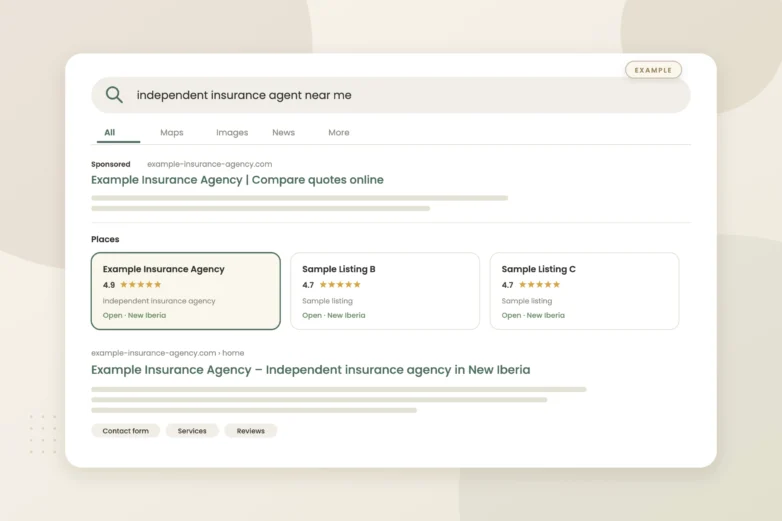
- Your Google Business Profile and reviews. Ads send people to check you out; a thin profile or an old review can lose the click you just paid for.
- LSA status and AI answers. Confirming LSAs aren’t an option for your category, and what ChatGPT and Google AI Overviews say about your agency.
Related reading
For the general small-business view, see whether Google Ads are worth it for Louisiana small businesses. For how LSAs work in the categories where they’re available, read our Local Services Ads guide. To set an overall budget, start with what an insurance agency should spend on marketing.
If you’d like a clear read before you spend on ads, our free visibility audit shows who’s bidding on your agency’s name, how your profile and reviews compare locally, and where your quote path loses people.
More owner questions we’ve answered: How Should an Insurance Agency Handle Bad Reviews About Rates or Claims? · Is SEO Worth It for a Small Independent Insurance Agency? · Should Each Attorney or Doctor Have Their Own Google Business Profile?
Frequently asked questions
Should I bid on carrier names like Progressive or Travelers?
Usually not. Most of those searches come from existing policyholders looking for customer service, claims or billing. If you do test it, follow Google’s trademark rules and each carrier’s marketing guidelines, and watch the search terms closely.
How long should I test Google Ads before deciding?
Give a narrow campaign at least a few months, because insurance shopping is uneven and commercial searches are low volume. Judge it on quotes and bound policies, and adjust negative keywords weekly during the first month.
Do I need a separate landing page for ads?
It helps. A page built for one line of business, with your phone number and a short quote form, usually converts better than your home page. Keep it consistent with your Google Business Profile so shoppers trust what they see.
Can I run Google Ads myself?
Many owners can run a small brand and local campaign with weekly attention. The common mistakes are leaving broad match and Presence or interest targeting on, skipping negative keywords, and not tracking calls, so watch those closely.
Are Facebook ads a better choice than Google Ads for agencies?
They do different jobs. Google Ads reach people actively searching for coverage, while Facebook is better for staying visible locally and promoting reviews or storm-season tips. Many agencies start with Google search and add social once tracking is in place.
Sources
- WordStream (LocalIQ): 2026 Google Ads Benchmarks — 13,474 U.S. campaigns, Apr 2025-Mar 2026; Finance & Insurance median conversion rate 2.64% vs 8.18% all industries; CPC below overall median
- Insurance Journal: Insurance Keywords Add Big to Google Profits (July 2011, older) — WordStream 2011 study ranked insurance the costliest keyword category
- Google Local Services Ads Help: Getting started with Local Services Ads — Insurance agency category: California and Florida only
- Google Ads Help: About advanced location options — Presence or interest is the default; Presence option available
- Google Ads Help: Set up your call ads for success — Schedule calls for when someone can answer; avoid generating calls you can’t accept
- Google: Financial services verification coming to the United States and Canada (Oct 20, 2026) — U.S. rollout early 2027; product scope to be published before launch