Fake Google Review From a Former Employee or Competitor? What to Do
Last updated: November 12, 2026 · By Kayce Sadler, Founder & CEO, Abode Marketing
Report it. Google’s Maps content policy names “current or former employment” and “industry competitors” as conflicts of interest, so a review from either one breaks the rules even if every word were true. Flag it from your profile or the Reviews Management Tool, appeal once if Google declines, and post a short, calm reply that reveals nothing about the person. A defamation claim is a separate, legal question for your attorney.
Key takeaways
- Google’s policy prohibits content based on a conflict of interest, including “current or former employment” and affiliations “such as industry competitors, familial relationships.”
- Google’s fake engagement rules separately ban posting on a competitor’s place “to undermine that business’ or product’s reputation.”
- Google says evaluating a reported review typically takes several days; if it is left up, you get a one-time appeal, for up to 10 reviews per submission.
- Lawyers: ABA Formal Opinion 496 says a negative online review does not open the Rule 1.6 door to revealing client information. Medical practices: HHS settled with a provider for $30,000 over PHI disclosed in review replies.
- Under Louisiana law, defamation requires a false and defamatory statement, unprivileged publication, fault and injury; whether a review meets that test is a question for an attorney.
Does Google’s policy actually cover reviews from former employees and competitors?
Yes, in plain words. Under “Conflict of interest,” Google’s Maps user-contributed content policy prohibits content based on a conflict of interest, and says that “may include current or former employment, a contractual or consultory relationship, or other professional or personal affiliations that demonstrate a conflict of interest (such as industry competitors, familial relationships, etc.).”
Competitors are covered twice. The policy’s fake engagement section also bars anyone who would “post content on a competitor’s place or business to undermine that business’ or product’s reputation,” and content “posted from multiple accounts by or at the request of one person.” So the ex-paralegal’s one-star review and the rival agency’s burst of new-account reviews are both policy problems, not just opinions you dislike.
How do I report it, and how long does Google take?
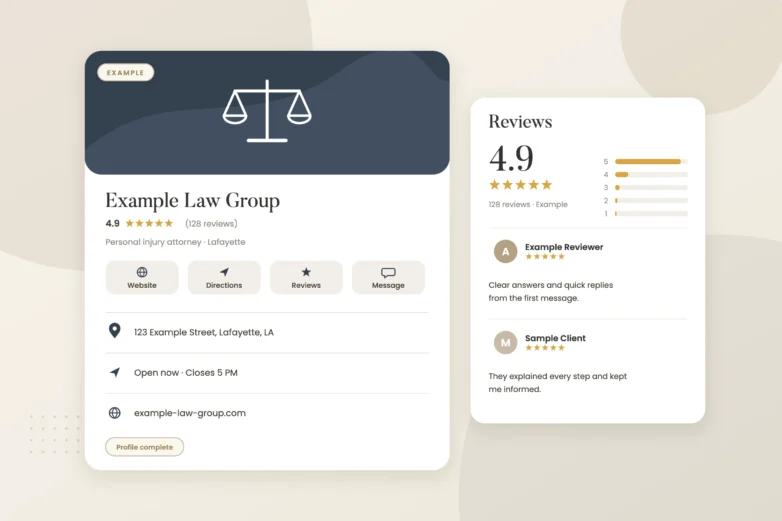
You have two routes, both in Google’s “Remove reviews from your Business Profile” help article. From your profile, select Read reviews, choose the report icon next to the review, pick a reason and send it. Or use the Reviews Management Tool: confirm the Google account tied to the profile, pick your business, choose to report a new review for removal, and submit a reason.
Google says evaluation typically takes several days. If it decides there is no violation, the tool lets you file a one-time appeal, selecting up to 10 reviews per submission. An escalated appeal ends with an email giving the final decision. Google also warns to report only reviews that violate policy, not ones you simply disagree with, so pick the reason that fits the facts.
Here’s my take: Google cannot see your payroll. A review that never mentions employment looks like any other complaint. Keep your own file with the reviewer’s name, employment or separation dates, any matching wording from a resignation email, and the review link, so your appeal can explain the connection in a sentence or two without exposing anyone’s private details.
What should I say in my public reply?
Less than you want to. A short reply such as “We take feedback seriously, but we can’t find a record of serving anyone by this name. Please call our office so we can look into it” signals to readers that something is off without arguing. Do not name the person, mention their firing, or speculate about motives.
For law firms and medical practices, restraint is also a rule. Louisiana Rule of Professional Conduct 1.6 bars revealing information relating to a client’s representation outside narrow exceptions, and ABA Formal Opinion 496 concluded that a negative online review is not the kind of “controversy” that permits disclosure. On the health side, HHS’s Office for Civil Rights reached a $30,000 settlement in 2023 with a New Jersey psychiatric provider that disclosed a patient’s health information while responding to negative reviews. If the reviewer turns out to be a real former client or patient, the same caution applies. Insurance agencies should likewise keep policy and claim details out of any reply.
What should I avoid doing?
- Don’t retaliate. No reviews on their new employer’s listing, no posts about them, and no messages to their contacts.
- Don’t flood the profile. Asking staff to post reviews or hitting customers with a sudden wave of requests creates its own conflict-of-interest problem under the same policy.
- Don’t offer anything for removal. Google’s policy bars incentives for removing or revising a negative review.
- Don’t threaten in public. Mentions of lawyers or lawsuits in a reply tend to escalate things and read badly to prospects.
Can I sue over a fake review?
Sometimes, but that is a decision to make with an attorney, not a marketing agency. As a general description, Louisiana courts applying Costello v. Hardy list four elements of defamation: a false and defamatory statement about another, an unprivileged publication to a third party, fault on the part of the publisher, and resulting injury. If any element is missing, the claim fails, and whether a statement can carry a defamatory meaning is a legal question for the court. Filing deadlines also apply, so don’t sit on it.
Google also runs a separate legal removal request process, distinct from policy reports. Its legal help center explains how to copy a review’s link using Share and then Copy link so the right review is identified. Your attorney can tell you whether that route fits.
| Review type | Policy that applies | Action |
|---|---|---|
| Former employee posing as a customer | Conflict of interest: “current or former employment” | Report, keep your evidence file, reply briefly |
| Current employee review, positive or negative | Conflict of interest | Ask them to remove it; set a staff policy |
| Competitor or someone acting for one | Conflict of interest plus fake engagement | Report each review; note timing and account patterns |
| Several reviews from one person’s accounts | Fake engagement: multiple accounts by one person | Report all of them in one sitting so the pattern is visible |
| Real customer, harsh but honest | None | Respond calmly; don’t report |
| False accusations of a crime or misconduct | Possibly legal, not just policy | Report under policy and talk to an attorney |
What we’d check first after a suspicious review
- The reviewer’s profile. Other reviews they have posted, especially on competitors’ listings, plus how new the account is and when it posted.
- Your report history. What you have already flagged in the Reviews Management Tool and whether an appeal is still available.
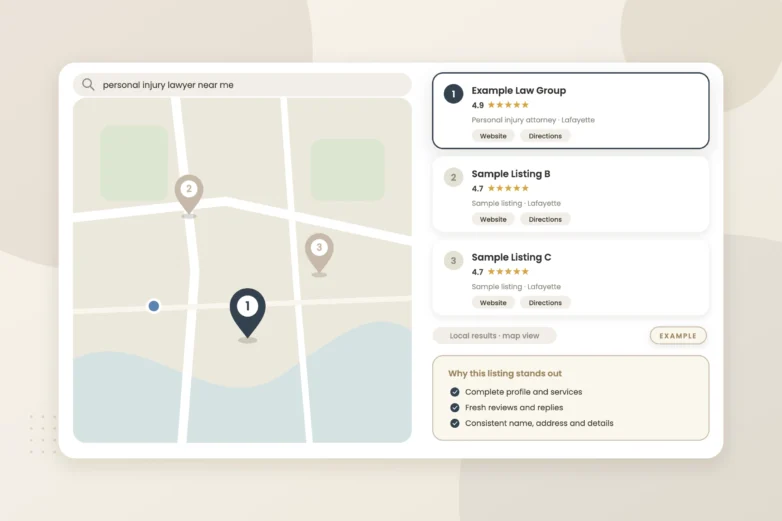
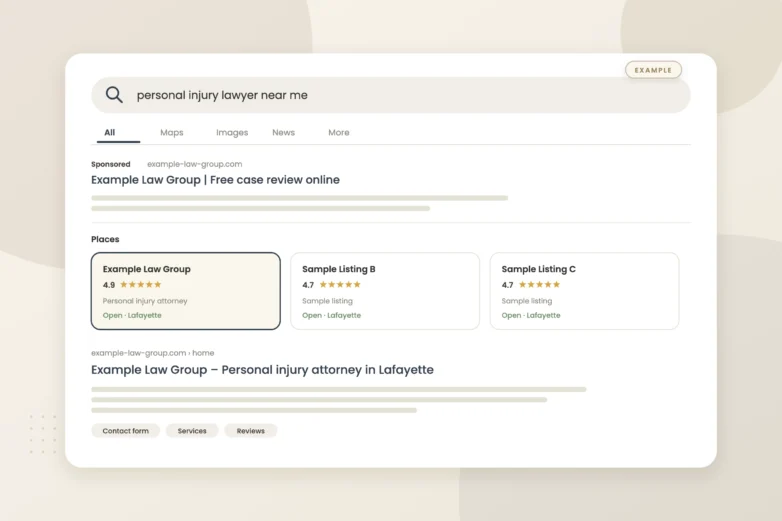
- Your rating against the map pack. How much one review moves your average compared with the three competitors showing for your main search, which tells you how urgent this really is.
- Your reply. Whether it reveals client, patient or policyholder details, and whether it reads as calm to a stranger.
- Your request rhythm. Whether recent customers are being asked for reviews at a steady pace, which is the long-term answer to any single bad review.
Related reading
This page is about removal. For wording your reply, see how Louisiana law firms should respond to negative reviews or our broader guide on responding to negative reviews as a service business. To dilute one bad review over time, start with getting more Google reviews.
If you’d like help sorting a policy problem from a bad day, our free visibility audit reviews your rating and recency against the map pack, your recent review activity and replies, and how your profile shows up in AI answers.
More owner questions we’ve answered: Should Each Attorney or Doctor Have Their Own Google Business Profile? · A Hurricane Closed Our Office. What Do We Do With Google Business Profile? · How Long Does Local SEO Take to Work? An Honest Timeline
Frequently asked questions
Can I make Google tell me who wrote an anonymous review?
Not through a policy report. Identifying an anonymous reviewer generally requires a legal process, which is something to discuss with your attorney rather than ask Google support for.
What if a current employee left us a five-star review?
That still falls under Google’s conflict-of-interest policy, which covers current employment as well as former. Ask the employee to remove it and put a simple written policy in place so it does not happen again.
Should I report the review more than once?
Reporting the same review over and over does not speed things up. Report it once, wait for the decision, and use the one-time appeal if Google leaves it up.
Does a single fake one-star review really hurt?
It depends on your volume. On a profile with a few dozen reviews one rating can visibly move your average, while on a profile with hundreds it barely registers, which is why steady new reviews are the most durable defense.
Can I ask the former employee to take the review down?
You can, but do it in writing through your attorney or HR channel and never offer anything in exchange. Google’s policy bars incentives for removing negative reviews, and an informal confrontation can make things worse.
Sources
- Google Maps Help: Maps user-contributed content policy — Conflict of interest wording (current or former employment, industry competitors); fake engagement on competitors; multiple accounts; incentives for removal
- Google Business Profile Help: Remove reviews from your Business Profile — Reporting steps, Reviews Management Tool, several-day evaluation, one-time appeal up to 10 reviews
- Louisiana Attorney Disciplinary Board: Louisiana Rules of Professional Conduct — Rule 1.6(a) confidentiality and (b)(5) controversy exception
- ABA Journal: Lawyers must use caution when responding to negative online reviews (Formal Opinion 496) — Negative review is not a controversy permitting disclosure; suggested neutral replies
- HHS OCR: Agreement with New Jersey provider that disclosed patient information in response to negative online reviews — $30,000 settlement and corrective action plan, 2023
- Justia: Arnaud v. Dies (La. App. 3 Cir. 2016), quoting Costello v. Hardy — Four elements of defamation under Louisiana law; defamatory meaning is a legal question
- Google Legal Help: How to find a URL of potentially illegal content — Legal removal request path; copying a local review’s link via Share > Copy link