Changing Your Law Firm’s Name? How to Keep Your Google Rankings and Reviews
Last updated: November 12, 2026 · By Kayce Sadler, Founder & CEO, Abode Marketing
Your reviews are attached to your Google Business Profile, not to the words on your sign, so the biggest decision is whether that profile carries forward. Keep the same profile, domain and phone number wherever Google’s rules allow, and change the name in a set order: bar and entity records first, then the website, then Google, then every directory. If the domain has to change too, redirect every old page to its new match and file a Change of Address in Search Console.
Key takeaways
- Google lets a profile keep its history through a name change only when it’s a minor change (same proper nouns, same services, same category) or a multi-location business. Otherwise Google treats it as a new business.
- Google warns that changing a verified business name may trigger re-verification, so get the new sign up before you edit the profile.
- If the domain changes, Google says to keep redirects generally at least 1 year; the Change of Address tool forwards signals for 180 days.
- Louisiana Rule 7.10(e) bars using the name of a lawyer formerly associated with the firm while they aren’t actively and regularly practicing there. Rule 7.10(g) allows retired or deceased members’ names.
- Update the website before Google. Sterling Sky warns that Google may revert a new name or ask for re-verification if it isn’t on your site yet.
I get this call a few times a year: a name partner retires, two firms merge, or the old name is simply impossible to spell over the phone. A rename doesn’t have to cost you the rankings and reviews you spent years earning. Doing the steps out of order is what costs you.
Do our Google reviews survive a name change?
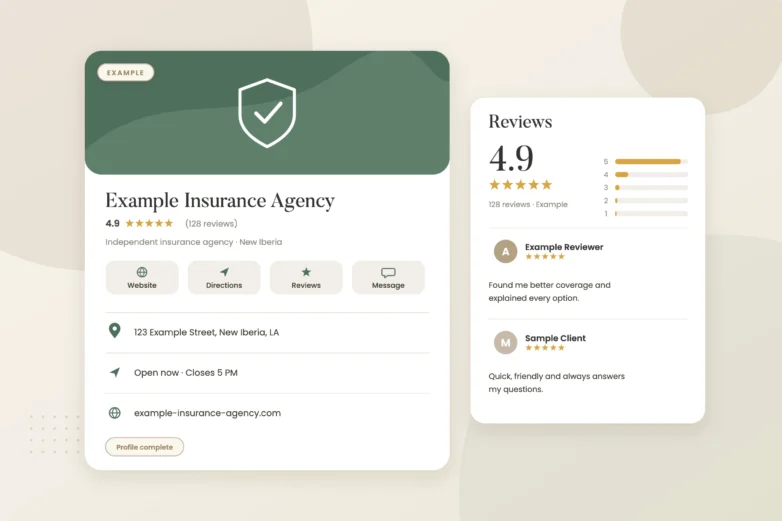
They survive if the profile survives. Reviews, photos and ranking history belong to the Google Business Profile itself. Edit the name on that profile and the reviews stay put. Close it and start a fresh one, and you start at zero.
The catch is that Google doesn’t let every rename keep its profile. Its guidelines say a profile “may be eligible for rebranding” with “a minor name change, in which the proper nouns and services described in the business name remain unchanged and the business category remains unchanged.” Businesses with multiple locations may also qualify. If your change doesn’t meet that test, Google says it’s “considered a new business,” and you’re expected to mark the old profile closed and create a new one.
Here’s my take. Read that wording against your actual situation before anyone touches the dashboard. A hypothetical “Smith & Jones” becoming “Smith Law” after Jones retires is the same firm, same office, same phone, same clients, but a proper noun did change. If you can’t tell which side of the line you’re on, ask Google Business Profile support before editing. What you should never do is create a second profile while the old one is still live. Google’s guidelines say “there should only be one profile per business.”
What changes if a partner leaves to start their own firm?
Then you’re dealing with two businesses, not one renamed business. The departing lawyer’s new firm at a new address needs its own new profile. Your firm keeps its profile, reviews and history. Reviews that mention the departing lawyer by name stay where they are.
Two housekeeping items people miss. First, check who has owner or manager access to your profile. Google’s own security advice is to “remove ex-employees’ profile access if they no longer work at your business.” Second, if the departing attorney has an individual practitioner profile of their own, agree on who controls it before their last day, so nobody is fighting over a login later.
What about a merger, when two firms become one?
A merger is where firms get into trouble with duplicates. If both firms end up working out of one office under one name, you have two profiles for one business at one address. Decide which profile carries forward. It’s usually the one with more reviews and the longer verified history. Then ask support how to retire the other one properly. Don’t assume the second profile’s reviews will transfer just because you close it.
Do we have to change our domain name too?
Not necessarily, and I’d think hard before you do. If you do move to a new domain, Google’s site-move guidance says to “expect temporary fluctuation in site ranking during the move.” It also says a small to medium site “can take a few weeks for most pages to move.”
To do the move right, 301-redirect every old page to its closest new match, not everything to the homepage. Then use Search Console’s Change of Address tool. It only works on domain-level properties, and you must be a verified owner of both the old and new properties under the same Google account. Google forwards signals for 180 days, and recommends keeping redirects “generally at least 1 year.”
What do the Louisiana bar rules say about the new name?
A few rules matter here. Check the specifics with the LSBA’s Ethics Counsel or your own ethics counsel. This is a summary, not advice.
- Rule 7.10(e): a lawyer “formerly associated with a firm” can’t stay in the firm name or letterhead “during any substantial period in which the lawyer is not actively and regularly practicing with the firm.” That’s often why the rename is happening in the first place.
- Rule 7.10(g): a firm may keep the names of “deceased or retired members” or “a predecessor firm in a continuing line of succession,” if otherwise permitted.
- Rule 7.10(c): if you advertise under a trade name, that same name has to be the firm name on your letterhead, business cards, office sign and fee contracts, and appear with your signature on pleadings.
- Rule 7.2(c)(1)(L): the new name can’t state or imply an ability to obtain results.
- Supreme Court Rule XIX, Section 8(C): if the rename comes with a move, lawyers must file a change of physical address with the LSBA within thirty days.
The rename checklist, in order
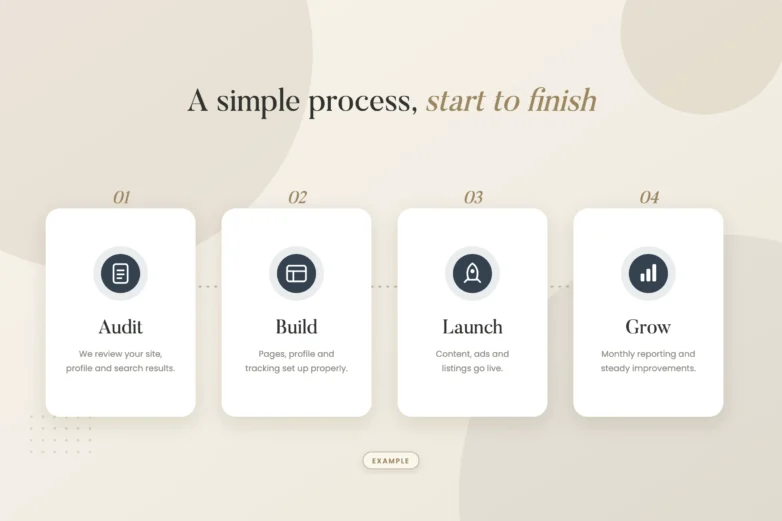
- Six to eight weeks out: clear the name with ethics counsel, update your entity filing with the Louisiana Secretary of State, and order the new exterior sign.
- Four weeks out: build the renamed site on staging. If the domain is changing, map every old URL to its new URL in a spreadsheet.
- Launch day: put the new name live on every page, with a plain line on the About and Contact pages: “We’re now [New Name], formerly [Old Name].” Turn on redirects and file the Change of Address.
- Same week, sign installed: edit the name on Google Business Profile. Have photos of the new signage ready, since Google may ask you to re-verify.
- Weeks one and two: update the LSBA member record, Avvo, Justia, Martindale and Lawyers.com, FindLaw, Super Lawyers if listed, Yelp, Bing Places, Apple Business Connect, Facebook, LinkedIn and your chamber listing.
- Week one, inside the office: change email signatures, voicemail, the receptionist’s greeting and intake scripts. Teach intake to say “formerly” so nobody thinks they called the wrong place. Update Google Ads copy and your Local Services Ads business name. Sterling Sky notes a name change can unlink LSA reviews, and support may want proof of the new name.
- Months one through six: watch branded searches for both names in Search Console, and recheck the profile for edits Google reverted.
What we’d check first before your rename
- Profile ownership and status. Is the profile verified, and who are the owners? A departed partner sitting as primary owner is the first thing to fix.
- What’s at stake in reviews. How your review count, rating and recency compare with the three firms in your map pack. That tells you how much a fresh profile would cost you.
- Every place the old name lives. Directory listings, bar profiles and data aggregators showing the old name or the departed lawyer’s name.
- The website’s equity. How many sites link to the current domain, and whether your Organization schema can carry the old name as an alternateName during the transition.
- AI answers for both names. What ChatGPT and Google’s AI Overviews say when asked about the old name and the new one, and whether you’ve claimed your ChatGPT business profile.
- Paid search. Your LSA profile name, your brand campaign and who is bidding on the old name once it’s up for grabs.
If the rename is part of a bigger reset, these may help: our 2026 Google Business Profile checklist for Louisiana law firms, the profile mistakes we see most often, and how AI search tools describe Louisiana law firms.
If you’d like a second set of eyes before you flip the switch, our free visibility audit maps where your current name lives online and what a rename would touch. It’s a lot easier to plan this together than to clean it up afterward.
More owner questions we’ve answered: Should a Personal Injury Firm Buy Leads or Build Its Own Marketing? · Are Avvo, Justia, FindLaw and Super Lawyers Profiles Still Worth It in 2026? · How Long Does Local SEO Take to Work? An Honest Timeline
Frequently asked questions
How long should we keep the ‘formerly known as’ line on our website?
Keep it at least until branded searches for the old name taper off, which for most firms means a year or more. A short line on the About page can stay indefinitely and helps former clients confirm they found the right firm.
Do we need to file our new ads with the LSBA?
Non-exempt advertisements still go through Rule 7.7 filing under the new name, just as before. Rule 7.8(g) exempts the firm’s own website from filing, but the site still has to comply with the rules. Confirm with the LSBA’s Ethics Counsel which pieces of your rollout need filing.
Should we reply to old reviews that mention the former name?
You don’t need to edit or chase old reviews; they still describe real experiences with your firm. When you reply to new reviews during the transition, using the new name naturally helps reinforce it. Never ask clients to change or remove reviews they’ve already left.
Will a name change hurt our map pack rankings?
If the profile, address, phone and category stay the same, most firms see little lasting change once Google accepts the edit and directories catch up. The bigger risks are a rejected edit, a re-verification delay, or a new domain launched without page-to-page redirects.
Can we keep our old phone number after the rename?
Yes, and I’d encourage it. Your phone number appears on hundreds of listings and in clients’ contacts, and keeping it gives Google and directories one consistent detail through the transition.
Sources
- Google Business Profile Help: Guidelines for representing your business on Google — Rebranding eligibility (minor name change, same proper nouns, services and category), new-business rule, one profile per business
- Google Business Profile Help: Edit your Business Profile — Changing a verified business name may require verifying again; use real-world signage name
- Google Business Profile Help: Help protect your Google Business Profile — Remove ex-employees’ profile access
- Search Console Help: Change of Address tool — Domain-level only, owner of both properties, 301 redirects, 180 days of signal forwarding
- Google Search Central: Site moves with URL changes — Keep redirects generally at least 1 year; expect temporary ranking fluctuation; few weeks for small to medium sites
- LSBA: Louisiana lawyer advertising rules (effective Jan. 1, 2022) — Rules 7.10(c), (e), (g), 7.2(c)(1)(L), 7.8(g)
- Louisiana Supreme Court Rule XIX, Section 8 — Change of physical address must be filed within thirty days