Do Healthgrades, Zocdoc, Vitals and WebMD Profiles Matter?
Last updated: November 12, 2026 · By Kayce Sadler, Founder & CEO, Abode Marketing
Yes, but they are not all the same kind of thing. Healthgrades, WebMD Care (which also feeds Vitals) and your insurers’ provider directories are free to claim and mostly about accuracy, while Zocdoc is a marketplace that bills you per new-patient booking. Claim and correct the free ones first, then decide on Zocdoc the way you would decide on any paid ad channel.
Key takeaways
- WebMD says a basic WebMD Care profile is free, and that basic profile can also appear in Vitals.com doctor directories.
- U.S. News Doctor Finder has no separate claim process: its doctor profiles are powered by Doximity, so you edit your Doximity profile.
- Zocdoc charges a one-time fee per new patient-provider booking it helps generate, charged at booking even if the patient later cancels or no-shows (some cancellations are waived).
- Under the No Surprises Act, providers must have processes to send directory updates to health plans when a network contract starts or ends and when details materially change.
- In one 2026 vendor study of ChatGPT doctor answers, national directories were 8.3% of citations; hospital rosters and specialty-board profiles were cited far more often.
Which of these doctor profiles are free to claim?
Most of them. Healthgrades lets a provider or an authorized staff member find the existing profile at update.healthgrades.com, confirm identity, and then edit the bio, headshot, office address, board certifications, education and hospital affiliations. A Healthgrades representative contacts you to verify before changes go live, so plan for a short back-and-forth.
WebMD Care Directories states plainly that a basic profile is free, and WebMD notes that the basic profile can also be listed on Vitals.com doctor directories. One claim, two consumer sites. U.S. News Doctor Finder works differently: Doximity powers those profiles and they sync automatically, so the fix for a wrong U.S. News listing is to update the physician’s Doximity profile.
Insurer directories are not marketing listings at all. You change them through each payer’s provider portal or credentialing contact. In Louisiana that usually means your commercial payers plus, if you take Medicaid, each Healthy Louisiana plan you contract with.
How is Zocdoc different from Healthgrades or WebMD?
Zocdoc is a booking marketplace, and you pay for results instead of a listing. According to Zocdoc’s provider help center, there is no subscription or upfront fee to join. Instead, Zocdoc charges a one-time fee for each “discovery booking,” meaning a new patient-provider pairing that Zocdoc helped the patient find. The fee varies by specialty and location.
A few details matter for an owner doing the math:
- The fee is charged at booking, even if the patient reschedules, cancels or does not show, though Zocdoc may waive some cancellations.
- Zocdoc decides “new” versus “existing” from what the patient selects and its own records, not your EHR. You have 7 days to claim a fee you think was charged on an existing patient.
- You may not pass the booking fee on to patients.
- Bookings that come through your Google Business Profile or your own website booking link count as “reputation bookings” and carry no fee.
Here’s my take: treat Zocdoc like paid search. If a new spine or pain patient is valuable to you and your schedule has open new-patient slots, it can be worth testing. If you are already booked out three weeks, you would be paying to fill a calendar that is already full.
Why do insurer provider directories matter so much?
Because patients filter by network before they ever read a review, and federal law now puts duties on both sides. Under 42 U.S.C. 300gg-139, added by the No Surprises Act, providers must have business processes to submit directory information to plans when a network agreement begins or ends, when there are material changes, and when a plan asks. The plan side is required to verify directory data every 90 days and process updates within two business days.
There is a money angle, too. If a patient relies on a directory that wrongly shows you as in-network, the statute limits what they can be charged to in-network cost sharing, and a provider who collects more has to refund the difference with interest. A stale payer listing is a billing exposure, not just a marketing gap.
Do ChatGPT and AI Overviews pull from these directories?
Partly. In research published by Medical Economics in August 2026, Halcy (an AI-visibility vendor for practices, which the article discloses) classified about 33,000 ChatGPT citations from roughly 1,200 patient-style prompts across 10 specialties and 20 metros, run in May 2026. Hospital and academic rosters were 27.5% of citations, specialty-board or association profiles 22.1%, national directories 8.3%, state medical-board license pages 5.1%, and review sites 3.8%.
That is one vendor’s ChatGPT-only study, so hold it loosely. But the direction is useful: your Healthgrades and WebMD profiles help, and your hospital affiliation page, board or association listing, and state license record are just as worth getting right.
Does keeping name, address and phone consistent still matter?
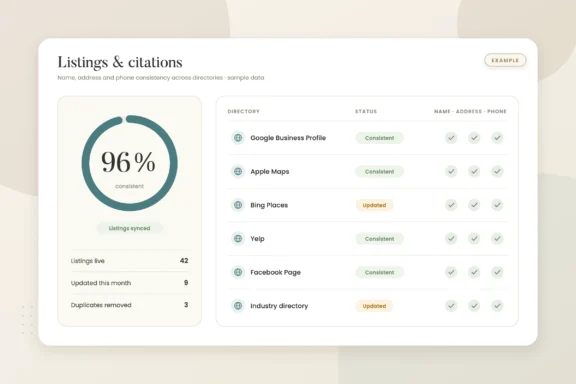
Yes, especially after a move or a provider change. When the old suite number lives on in a data feed, it can resurface on directories you never touched. Patients call the wrong number, and AI tools summarizing your practice inherit the mismatch. Pick one exact format for the practice name, address and main phone, and use it everywhere.
| Directory | Free claim? | Main value | Watch-out |
|---|---|---|---|
| Healthgrades | Yes | Profile and ratings that show for doctor-name searches | Edits wait on a verification call from Healthgrades |
| WebMD Care (feeds Vitals) | Yes, basic profile | One claim covers two consumer directories | Paid upgrades are optional; start with basic |
| U.S. News Doctor Finder | No separate claim | Synced from Doximity | A stale Doximity profile means a stale U.S. News one |
| Insurer directories | Via payer portal | Network status, the first filter patients use | Federal duty to send updates on material changes |
| Zocdoc | Free to join; fee per new-patient booking | Marketplace demand from patients not yet looking for you | Fee applies at booking even if the patient no-shows |
| Google Business Profile | Yes | Map results, reviews, booking link | Duplicate or outdated practitioner listings |
What we’d check first for a practice’s directory footprint
- Doctor-name searches. Search each provider’s name plus city and note which directories rank on page one and whether their address and phone match your Google Business Profile.
- Google Business Profile for the practice and each practitioner. Categories, hours, verification status, and whether a booking link is attached (and whose).
- Payer directories. Pull every provider’s listing on each major payer’s find-a-doctor tool and check network status, “accepting new patients” and location.
- Reviews. Google review count, rating and recency against the three practices in your map pack, plus the Healthgrades rating patients see.
- AI answers. Ask ChatGPT and Google AI Overviews for your specialty in your city with your top payer, note which sources they cite, and check whether you have claimed your ChatGPT business profile.
- Provider bio pages. Credentials, hospital affiliations and schema on your own site, since those pages back up everything the directories say.
Related reading
For the bigger picture on map results, see local SEO for Louisiana medical practices. If AI answers are your worry, our page on the ChatGPT business profile walks through claiming it. And before you add Zocdoc fees to the plan, compare them against your medical practice marketing budget.
If you’d like a second set of eyes, our free visibility audit looks at your Google profile, directory consistency, reviews and what AI tools say about your practice, and tells you which listings to fix first.
More owner questions we’ve answered: Should My Practice Offer Online Booking for New Patients? · How Do Pain and Spine Practices Market Within Compliance Lines? · Should I Hire an In-House Marketer or Use a Marketing Agency?
Frequently asked questions
Should I pay for an upgraded Healthgrades or WebMD profile?
Start with the free basic profiles and make sure they are accurate. Only consider paid upgrades if you can track the calls or bookings they produce, the same way you would judge any ad spend.
Is Vitals still a separate site I need to claim?
Not separately in most cases. WebMD says a free basic WebMD Care profile can also be listed on Vitals.com doctor directories, so claiming and correcting the WebMD Care profile covers both.
Does a Zocdoc booking that starts on my Google profile cost me a fee?
According to Zocdoc, bookings made through your Google Business Profile or website booking link count as reputation bookings and carry no fee. The per-booking fee applies to discovery bookings, where Zocdoc helped a new patient find that provider.
How often should someone review our directory listings?
Quarterly is a sensible rhythm, and it lines up with the 90-day verification cycle health plans follow under the No Surprises Act. Also update immediately whenever a provider joins, leaves, moves locations or changes networks.
Who on my team should own these profiles?
One named person, usually the practice manager or credentialing lead, with logins stored in a shared password vault. Directory accuracy tends to slip when it belongs to everyone and therefore no one.
Sources
- Zocdoc Provider Help: Understanding Zocdoc pricing and billing — Per-booking fee model, discovery vs reputation bookings, no-show/cancellation handling, 7-day existing-patient claim, no pass-through to patients
- WebMD Customer Care: Is a WebMD Care Directories profile free? — Basic profile is free; also listed on Vitals.com doctor directories
- Doximity Support: U.S. News Doctor Finder FAQs — U.S. News doctor profiles are powered by and sync from Doximity
- GatherUp: How to get more patient referrals with Healthgrades reviews — Healthgrades claim process via update.healthgrades.com and editable fields
- GovInfo: 42 U.S.C. 300gg-139, provider requirements for directory accuracy — Provider duty to submit directory info at contract start/end, material changes, plan request; refund of excess cost sharing
- Claritev: Understanding provider directory requirements under the No Surprises Act — Plan verification every 90 days and 2-business-day update processing
- Medical Economics: Before you pay for AI visibility for your practice, audit these five sources (Aug 2026) — Halcy study of ~33,000 ChatGPT citations; citation shares by source type and stated limitations